What did they pay for it
Start here, because everything else makes more sense once you know it.
Property sales are public record. The county recorder or assessor publishes the last sale date and price, searchable by address, free. Zillow and Redfin show the same thing faster, though less reliably.
Where the price is not shown directly, look for the recorded transfer tax. It is calculated from the sale price, so it gives the number away.
I ran this on a Kansas City house recently. Listed at $40,000 in March 2016. Sold to an investor at $85,000 in August. Five months, a renovation, and more than double.
That is not scandalous. Renovation costs real money and somebody has to do the work. It is also exactly how a good turnkey property gets made, which I have described in what British investors get sold in the USA. But a buyer who knows both numbers is in a completely different conversation from one who only knows the asking price.
Two honest limits. A handful of states, Texas among them, do not publish sale prices at all. And the records lag, so a sale from last month may not have appeared yet.
Does the arithmetic support the work
This is the check I would keep if I could only keep one, and almost nobody does it.
You now know what they paid and what they are asking. Ask whether the gap between the two could actually have paid for the work they say they did.
Let me run it on one of my own, because it is easier to show you a check that passes than one that fails.
A deal I am selling right now
A contractor bought a Kansas City house in February 2026 for $50,000. He funded it on his own bank line of credit rather than hard money, which matters because it kept his finance costs low.
He then did a full renovation: a basement conversion adding two bedrooms and a bathroom, all the permitting, a new roof, a new kitchen, a new bathroom and a full interior remodel. The work came to about $80,000.
It is being sold to an investor at $180,000. Here is the whole thing.
The deal I am selling right now, in full. My own fee is a line item.| Purchase | $50,000 |
| Renovation | $80,000 |
| Finance, bank line of credit | $3,900 |
| Holding costs, six months | $2,500 |
| Buying costs | $2,000 |
| My fee at 5%, paid by the contractor | $9,000 |
| Other closing costs | $2,000 |
| Total cost | $149,400 |
| Sale price | $180,000 |
| Contractor's profit | $30,600 |
| Margin on the sale price | 17% |
That is what a pass looks like. The gap between $50,000 and $180,000 is large. It also has to cover $80,000 of work, the money to fund it, six months of holding, both sets of transaction costs and my fee, and still leave the contractor enough to be worth doing.
Seventeen per cent is a working margin, not a windfall. If it were much thinner I would be concerned.
And what a fail looks like
Now the other kind. I looked at a Kansas City house that had been listed at $40,000 and sold on to an investor at $85,000 five months later, described as fully renovated.
A $45,000 gap. But a full renovation at trade rates, roof, furnace, air conditioning, water heater, electrical panel, plumbing, kitchen, bathroom, flooring, paint, windows, comes to roughly $54,000. Add buying, selling and holding costs and you are near $63,000.
It does not add up. Which means one of three things. The scope was lighter than described. The work was done far below trade rates. Or they made nothing, which nobody does twice.
None of those is proof of anything dishonest. But it is a question, and it has a good answer if the work was really done.
The one thing to remember: a big markup is not the warning sign. If you are buying turnkey, you want the seller to have made money, because that is what pays for the work and keeps them trading next year. The warning sign is a markup too small to have funded what they claim to have done.
How many layers are there
Running that check on my own deal exposes something more useful than the margin.
The usual turnkey chain has more people in it than buyers realize.
Investor, then the turnkey company, then the general contractor, then the subcontractors who actually swing the hammers. Every layer needs a margin, and the investor pays all of them.
The deal above has one fewer. The contractor bought the house himself, did some of the work himself, and subcontracted the rest. I am paid 5% by him for finding the buyer. There is no turnkey company in between taking a slice.
That is worth real money. If a turnkey company layer takes a fairly typical 15% to 20%, the same house, the same renovation, the same contractor, would need to reach the investor at $200,000 (which is what is actually appraised at) rather than $180,000.
Same work. Same quality. Thirty to forty five thousand dollars more, because of who is standing in the chain.
So the better question is not how much is the seller making. It is how many people are making something, and does the price still work after all of them?
Ask who owns the property today, who did the renovation, and who is being paid on the sale. If the answer is complicated, that is worth understanding before you commit.
The property tax
The single most commonly wrong number on a turnkey listing, and the easiest to check.
Go to the county assessor. Pull the tax history year by year. It is free and it takes minutes.
A Detroit listing I looked at quoted $1,130 a year. The assessor's record showed the homestead exemption had gone and the assessment was no longer capped. The real figure was closer to $3,100. If the property were reassessed to the sale price, higher again.
That is not a rounding error. It is most of the cash flow.
And check the assessment against the price, because that tells you what is coming. A Kansas City house I priced was assessed at about 30% of its market value even after a contentious reassessment. The tax bill is low today. A buyer inherits the gap when it closes. I worked through ten years of one property's real tax record in selling a US rental as a UK resident.
The insurance
The second most commonly wrong number. Get your own quote before you commit. It costs nothing and takes a phone call.
An Indianapolis listing quoted $780 a year. An independent quote on a comparable house nearby came back at $1,647. More than double.
Then two things almost nobody mentions.
Admitted or surplus lines. An admitted carrier is backed by the state guaranty fund if it fails. A surplus lines carrier is not. One of the four quotes I obtained was surplus lines and nothing in the listing said so.
And read the cancellation terms. One policy I reviewed said that if the management agreement ended for any reason, the policy terminated the same day. Change managers and you are uninsured, possibly without realizing.
Also compare what you are insuring for. Four quotes gave me four different loss settlement bases. The cheapest premium insured the property for its purchase price rather than the cost of rebuilding it, which is not the same thing at all.
The photos
Open Google Street View. It is free, it is instant, and it shows you the thing the photographs were framed to exclude. For a buyer who cannot fly out, it is the most useful two minutes available.
Then look at the listing photos properly.
One listing I reviewed had bare winter trees standing over a lush green lawn. There was no mailbox, no utility meters and no downpipes. It looked like a house and it did not look like a photograph.
The documented tells are consistent: skies and grass that look too good, seasons that disagree with each other, lighting that does not match, blurred edges or halos around objects, furniture that does not fit the room, plants that grow in ways plants do not.
The law changed on January 1, 2026. California's AB 723 now requires anyone advertising with a digitally altered image to disclose it, and where the advert appears on a website, to make the unaltered version available. New York and Illinois are considering the same.
There is a word for this now. People call it housefishing.
So ask for the unedited photographs. Any seller who has them will send them.
The rent, checked the slow way
The rent is the whole investment, so check it properly rather than quickly.
Look at what comparable houses are actually being advertised for, on those streets, right now. For voucher rentals, AffordableHousing.com shows what other landlords letting to voucher tenants think they can get.
But do it manually. This is the part I will not shortcut and will not hand to a spreadsheet or a model. Read the listings. Look at the photographs. Check the condition is genuinely comparable, because a renovated three bedroom and a tired three bedroom on the same street are not the same product and will not achieve the same rent.
Then call a property manager on that street and ask what they are actually letting at. Not a projection. What they signed last month.
And if the property is tenanted, ask for the rent ledger and read the lease. The ledger tells you whether the rent is being paid or merely agreed. The lease tells you what you are inheriting, including when it ends.
I have written about how far a quoted rent can sit from an achievable one in fair market rent is not your rent.
The scope of work, and your inspector
Ask for the scope of work. Not for the price, for the inspection.
Most sellers will not give you a costed scope from the contractor, and I would not expect them to. But they should tell you what was done.
Then use it to aim your inspector. A general inspection tells you the condition of the house. A scope of work lets you ask specific questions: was the electrical panel actually replaced, is the water heater new, is the furnace the one described, was the roof done or patched.
That turns a report into a verification. The obvious things you can see for yourself in photographs, windows, doors, flooring, paint, kitchens and bathrooms. The expensive things are behind walls and above ceilings, and those are the ones worth naming.
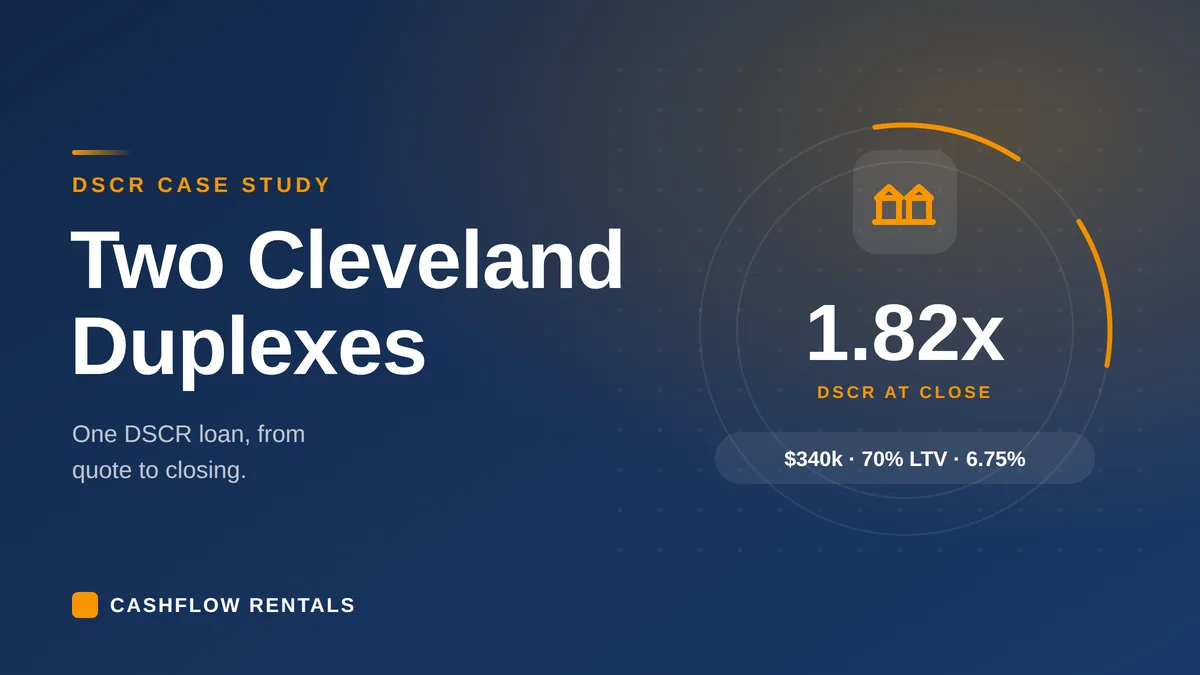
And I would always add a sewer scope, which runs about $250 and finds root ingress, cracks and collapses before you own them. A pest inspection too. Termite damage is invisible until it is expensive. There is more on using inspections as a negotiating tool in my Cleveland duplex case study.
The appraisal, and its limits
An appraisal gives you a great deal that a listing does not: verified square footage, the real bedroom and bathroom count, comparable sales, and a neighborhood section with the owner-occupier split, the vacancy picture, marketing times and whether demand is balanced.
That neighborhood section is genuinely useful, because it is somebody else's opinion of the area rather than the seller's.
But know what you are holding. If the appraisal was ordered by the seller rather than through a lender, it has not been through the independence process a lender-ordered appraisal goes through. That does not make it wrong. It means you read it as evidence rather than as a verdict.
And appraisals do move deals. On a Cleveland purchase I worked on, the appraisal came in $16,000 below the contract price and we renegotiated down by that amount before closing. It is a negotiating instrument, not a formality.
The people who manage it
The property manager decides most of your outcome, and you can check them before you commit.
Ask who manages it, then look them up. Read their reviews, and read the bad ones properly rather than counting stars. Ask how many units they run and how many staff they have. Ask what their fee covers and what it does not, because leasing fees, renewal fees and maintenance markups are where the difference lives.
Then call them yourself, before you buy, and ask what the house will really rent for. A manager who is not yet being paid by you has very little reason to flatter the number.
My wider view on choosing an operator is in how to pick a turnkey company.
What I provide, and where you can check it
I said at the top this article teaches you to check people like me. Here is what that means in practice.
On how I am paid. I charge a flat 5% fee. The seller pays it, and it is itemized on the settlement statement, which is a document you receive. So you can see exactly what I was paid on your transaction.
That is the question I would put to any turnkey seller: how are you paid, and does it appear on a document I will be given? A clear answer is a good sign. An unclear one tells you something too.
On the property, I provide three things.
The scope of work. A pre-approval with real terms from a lender, based on verified information rather than an indicative guess, which is a different thing from the estimates most sellers show and works the way I describe in my guide to DSCR loans. And an appraisal, which I flag as seller-ordered because that is what it is.
On the photographs, the professional set plus the unedited ones on request. Professional photographers adjust brightness and color; I would rather you saw both. I also provide photographs from before the renovation, photographs taken during it including behind the walls before the rough-in inspections, video walkthroughs, and live video walkarounds of the street if you want them.
And on all of it, the sources, so you can verify independently rather than take my word. The county records are public. The insurance quote can be yours rather than mine. The property manager will take your call.
None of that is generosity. It is the only version of this business that works when your buyer is four thousand miles away and cannot come and look.
The bottom line
Four listings. Three with a number that was wrong. Two wrong by more than double.
I did not find any of that by being clever. I found it by looking up public records, asking for a quote, and opening Street View.
The gap between a good turnkey deal and a bad one is rarely the house. It is usually the numbers attached to the house, and almost all of those numbers are checkable before you commit a penny.
Ask the questions. A seller with nothing to hide will answer them, and will probably be relieved you asked.
Remember, investing is a game of probabilities. Verification is how you move the odds.
If you want a checklist to work through on a specific property, the free tools in my investor starter kit cover the deal, the cash you need and the questions to ask.
This article is general information, not legal, tax or financial advice. Cashflow Rentals sells turnkey rental property to overseas investors and the author therefore has a commercial interest in this subject, which is disclosed above. The four listings referred to were real properties marketed by third parties; they are not named, and nothing here is an allegation against any identified seller. Renovation cost estimates are approximate trade figures used to illustrate a method, not quotations. Public record availability, insurance terms and disclosure laws vary by state. Always carry out your own due diligence and take professional advice before buying property.