Most of the foreign nationals I've worked with have the same initial preconception: "I have no US credit score, so no US lender will touch me." It's the single most common worry I hear, and it's simply wrong.
Most of the loans I help clients get are written at 70% loan to value with no US credit whatsoever, at a genuinely good interest rate. And here's the part that surprises people, including me when a specialist broker spelled it out again recently: having US credit can actually work against you, unless it's excellent. Let me explain how US credit really affects a DSCR loan for foreign nationals, and why the usual advice is often backwards.
Where the fear comes from
The worry is understandable, because it's true of the loans most people know and use in their own countries. A conventional mortgage in the US leans heavily on your FICO score. No US credit history usually means a decline, a bigger deposit, a higher interest rate, or higher cash reserves. People just assume every US mortgage works that way. They don't.
A DSCR loan works very differently, and the way they're underwritten is what really opens the US market to foreign nationals.
The reality: the property qualifies, not you
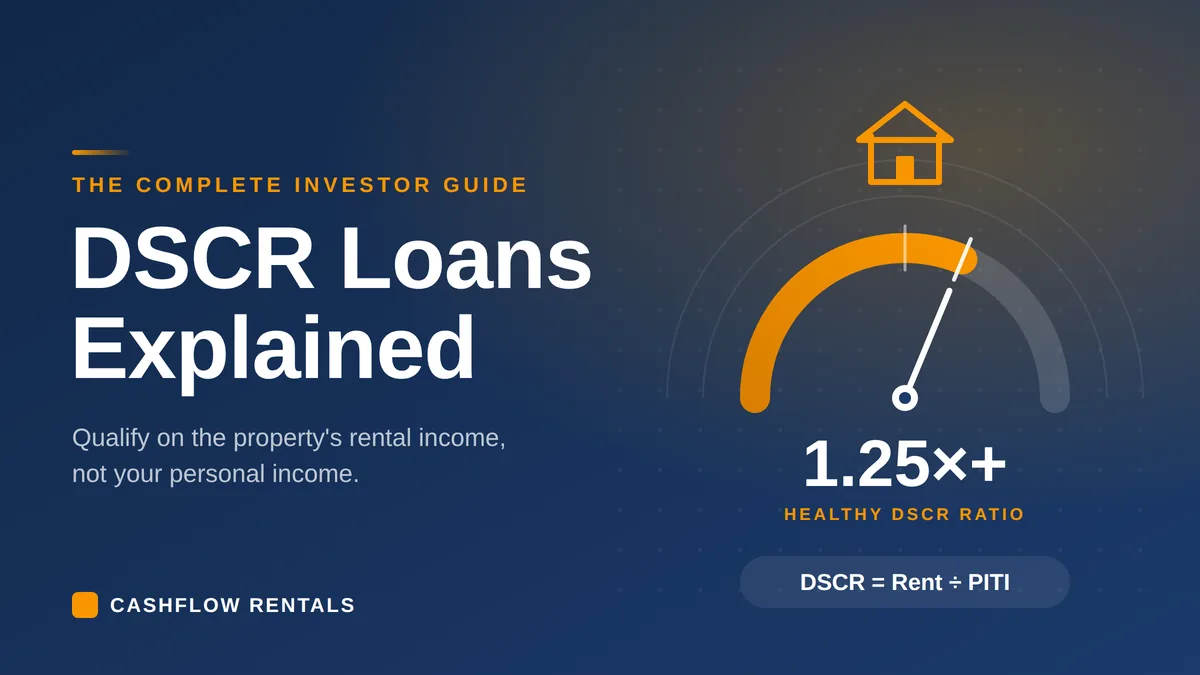
A DSCR loan is underwritten on the property's rental income against the mortgage payment, not on your personal income or your credit file. That's the entire point of the product, and it's exactly why it suits overseas buyers, as I explain in my foreign national DSCR loan guide.
I've personally used DSCR loans to purchase over 120 of my own rental properties in the US since 2016, and one thing I can tell you is that the terms, rates, and lender processes have all improved dramatically since I first started out.
In practice, most of the loans I help clients secure are written at 70% loan to value with no US credit at all, and they still come with a competitive rate. The absence of a US score isn't the obstacle people fear. It's normal.
How a no-US-credit loan actually gets approved
If not your credit, then what's the lender leaning on? Four things:
- The property's DSCR, meaning the rent comfortably covers the mortgage. More net cash flow after your mortgage payment (PITIA) means better rates and terms.
- Your 25 to 30% down payment, where the equity acts as your credibility in place of a US score. Lower loan-to-values are generally lower risk for lenders.
- Your cash reserves. For higher-risk loans, lenders will require you to hold more liquid cash reserves to cover emergencies.
- Clean, well-documented funds for your down payment, closing costs, and reserves. Lenders have to comply with international money-laundering rules, so make sure you keep a clean paper trail. I cover exactly how to do that in my guide to proving your money: source of funds and seasoning.
Where a lender does want a little more comfort, an international credit reference from your home-country bank, or alternative credit such as bank statements and rental history, can stand in for a US score. I've talked about that in more detail in my foreign national mortgage documents checklist.
The counterintuitive part: mediocre US credit can hurt you
Here's the twist a foreign-national-specialist broker put to me recently, and it kind of puts things into perspective when we're talking about US credit in relation to foreign nationals.
US credit doesn't improve your rate or terms until it's genuinely high. On the FICO scale, the "very good" band starts at 740. Below that, a fair or merely good score does very little for your pricing, and it can actively drag your terms down. A thin or middling US credit file invites questions that a clean, no-US-credit file simply doesn't raise, so the lender prices in the doubt.
I was talking to this broker about a German client who had been quietly building his US credit score for a few years. He had a FICO of 716, which is pretty good. But my broker wasn't able to provide any better terms unless the credit score was 740+, and in fact, a lower FICO would have actually got him a worse rate than the no-credit option.
The practical upshot is genuinely counterintuitive: if your US credit is average, you're often better off leaving it off the application entirely than including it. It feels wrong, because we're all trained to think more credit information is better. With foreign national DSCR lending, below a high score, it frequently isn't.
How US credit actually affects a foreign national DSCR loan| Your US credit | Lenders available to you | Effect on your rate and terms | Put it on the application? |
|---|
| None | Plenty of foreign national DSCR lenders | Priced on the property, commonly good at around 70% LTV | Nothing to include |
| Fair to good (roughly 580 to 739) | The same lenders | Little to no improvement, and it can drag terms down | Usually better left off |
| Very good or higher (740+) | More lenders open up | Can genuinely improve your rate and terms | Yes, include it |
The one thing to remember: below roughly 740, adding US credit to your application often hurts more than it helps, so you're usually better leaving it off. Only a genuinely very good score, 740 and up, moves the needle in your favor. Ask your broker to price your file both ways.
When US credit is actually worth having
None of this means US credit is useless. Once it's very good, 740 or above, it does help: more lenders will consider you, and the terms can genuinely improve. But only at that level.
The catch is that a US score that high takes years of US credit activity to build, which most foreign nationals starting out don't have and can't manufacture quickly. So excellent US credit is a real advantage for the long-term investor who builds it over time, not something you need to think about for your first deal.
Should you build US credit before you invest?
Short answer: no, not as a prerequisite. You can start now with none, and most of my clients do exactly that. If you're in this for the long game and plan to scale a portfolio, building strong US credit over the years can widen your options later, and it's worth doing quietly in the background.
Take my German client. When he comes to refinance in five years' time, his credit will be excellent. That's going to let him access better interest rates and higher loan-to-value products.
But don't let the absence of a US score delay your first purchase, because you're absolutely fine without one. For the full cash picture, see how much cash you really need for a foreign national DSCR loan.If you want to pressure-test a specific property for cash flow and financing eligibility, the free tools in my foreign investor starter kit are a good place to start.
The bottom line
No US credit isn't the barrier you think it is. A DSCR loan qualifies the property, and most foreign nationals get one with no US score at all, at sensible leverage and a fair rate.
If your US credit isn't excellent, you're usually better leaving it off than putting it forward, and only a genuinely very good score, around 740 and up, actually improves your terms. Don't spend years building credit you don't need in order to start.
Remember, investing is a game of probabilities, not certainties. Start with the deal in front of you, and treat great credit as a future advantage you can build over time, not a prerequisite that's going to somehow transform your funding eligibility.
This article is general information, not legal, tax, or financial advice. Cashflow Rentals is a real estate consultancy, not a lender, mortgage broker, or credit adviser. Lender criteria and credit-pricing rules vary and change, and figures are current as of July 2026. Always confirm your specific situation with a qualified mortgage professional.