A foreign national DSCR loan is an asset-based mortgage that qualifies on the property's rental income, not your personal income. That means a non-resident needs no U.S. Social Security Number, no U.S. credit history, and no verifiable U.S. income to get approved. It is the single financing tool that has let me, and many of my clients, build U.S. rental portfolios from overseas.
I have used DSCR loans to purchase 120+ rental properties in the USA as a foreigner. This guide walks the whole process: what these loans are, the exact requirements, the rates and terms, and how to find the right lender.
What is a foreign national DSCR loan?
A DSCR loan is an asset-based loan: the lender qualifies it on the property's ability to generate enough income to cover the mortgage payment, including taxes and insurance.
Unlike a traditional foreign national mortgage that looks at your personal income and credit, a DSCR loan is approved on the property's rent. For a foreign buyer, that is a game-changer.
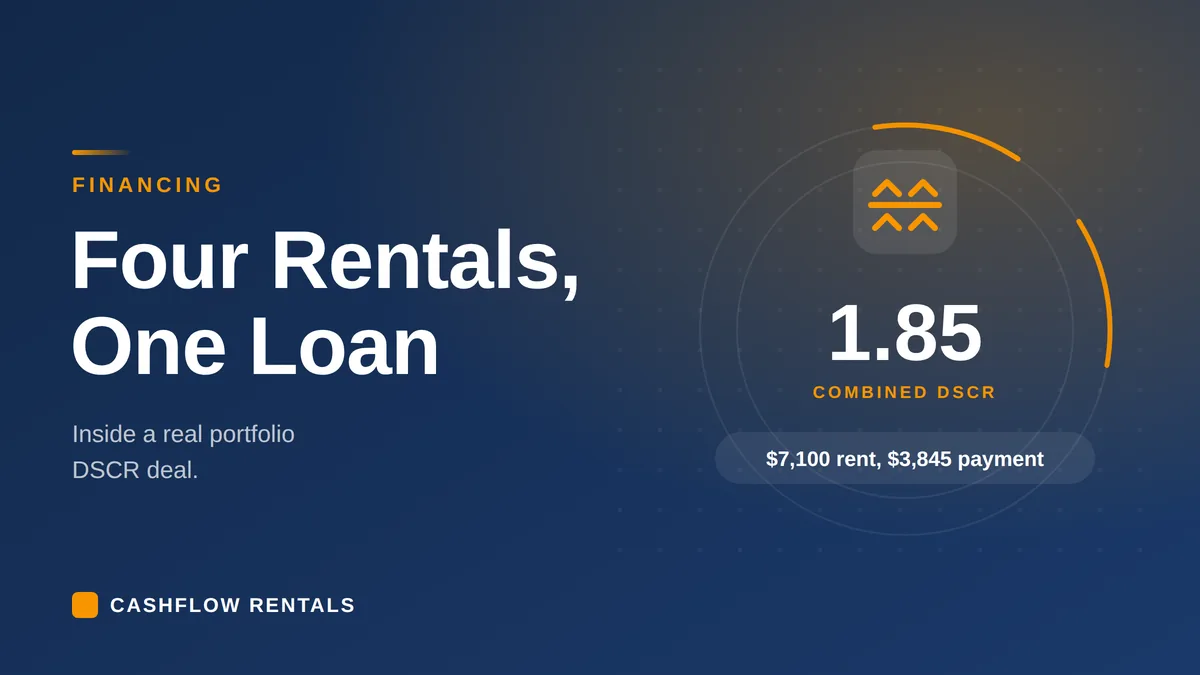
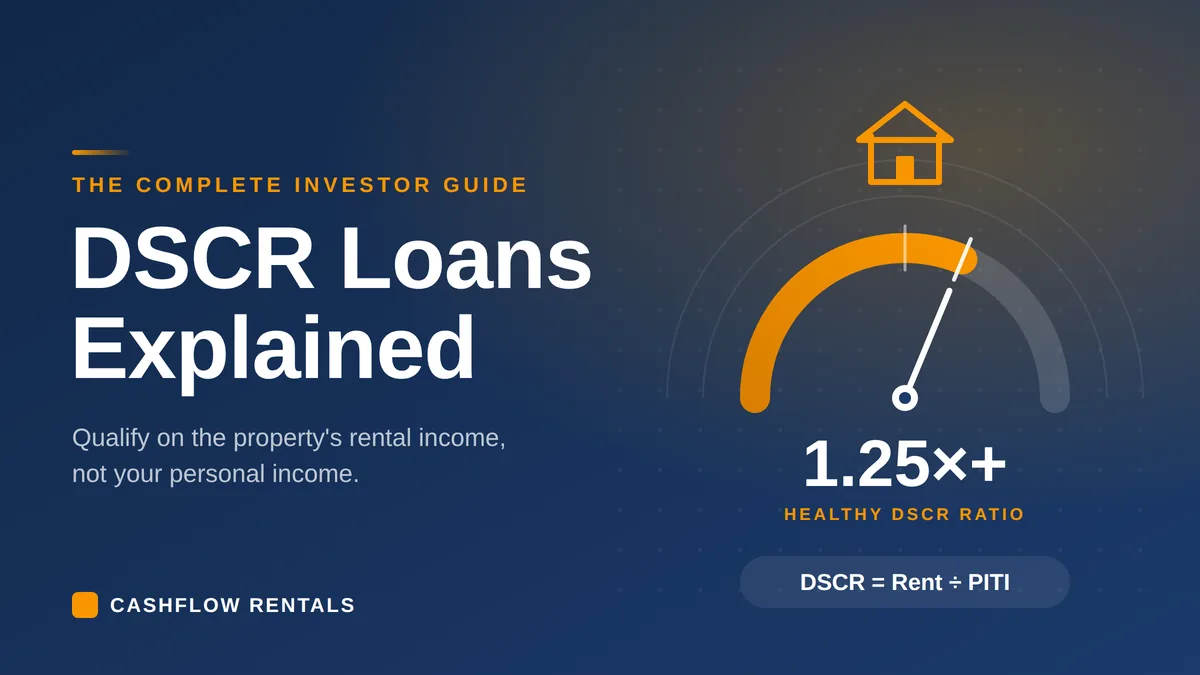
The key metric is the Debt Service Coverage Ratio: gross rent divided by the total monthly payment. If a property rents for $2,000 and the payment including principal, interest, taxes, insurance, and HOA is $1,600, the DSCR is 1.25. Lenders typically want 1.0 or higher, and 1.25 or greater unlocks better rates. You can work out the ratio for any property with my free DSCR calculator.
What this means in practice is that absolutely anyone can get funding, provided the underlying property is a oood deal, i.e. it generates enough rent to pay the mortgage.
The DSCR advantage for non-residents
DSCR loans have been a genuine godsend for me. As a foreigner I have no U.S. SSN, my U.S. taxable income is very low because real estate is so tax efficient, and I carry a lot of real estate debt, all of which makes a conventional mortgage very hard to get.
Because DSCR loans qualify on rental income, I can still qualify and keep growing my portfolio. And because there is no debt-to-income limit, I can hold as many loans as I want (about $3.15 million across 30 rental properties right now). As a foreigner, that lets you bypass the usual roadblocks and build a U.S. portfolio using the bank's money.
Key requirements
DSCR loans are far more flexible than conventional loans, but you still need to clear some basics.
You will not provide U.S. tax returns or W-2s (proof of income). But you will need to prove you are who you say you are, show you can cover the down payment, closing costs, and reserves, and meet a few other basic criteria:
- The property: you can get pre-approved with a few details (address, taxes, insurance, and rent). At full application the lender orders an independent appraisal to confirm value and market rent.
- Identification and KYC: a passport or government ID, plus enhanced know-your-customer checks (address verification, sometimes bank letters) and an OFAC screen.
- ITIN or EIN: buying in your own name needs an Individual Taxpayer Identification Number; buying through a U.S. LLC or other entity needs an Employer Identification Number and the entity documents.
- Down payment and liquidity: funds for the down payment, closing costs, and typically 3 to 9 months of payments in reserve. Some lenders want the funds seasoned (60 to 90 days) and traceable to a clear source.
- A U.S. bank account: in your name or your entity's, to receive funds and make payments. Simple, but many foreign investors trip up here because opening one can be harder than expected.
On whether having US credit helps or hurts, see my guide to whether you really need US credit to get a DSCR loan as a foreign national.
Step by step to approval
The process is not much different from a U.S. citizen's. The key is a solid property, documents in order, and a specialist lender who understands the product:
- Get documents ready: passport, visa if you have one, and recent bank statements showing your down payment and reserves.
- Find a specialist lender: not all DSCR lenders work with foreign nationals, so use one who does.
- Find a property with enough income to clear the DSCR threshold; run it through the calculator first.
- Get pre-approved on basic property details, which makes negotiating with sellers far easier.
- Make an offer, then the lender moves to formal application and underwriting.
- Underwriting and closing: the lender verifies your file and orders an appraisal, then you close, usually remotely, with no need to visit the U.S.
There are bad brokers and outright
scams in this space. Work only with a lender or broker
licensed on the NMLS, never pay fees directly to a lender upfront, and always confirm wire details verbally by phone, never by email alone.
Rates and terms
Can a foreign investor get the same DSCR rates as a U.S. citizen? Almost. Foreign national DSCR rates are typically about 0.25% to 1.00% higher, reflecting the perceived risk of lending to a non-resident without U.S. credit, and I have closed my own recent deals around 6.5% tp 7%, which is fine for my cash flow needs.
It's worth pointing out that it hasn't always been like this. Back in 2016 when US mortgage rates were below 5%, I was paying 8% as a foreign national. Now, I'm paying almost the same rates as US citizens, so the spread that used to be a barrier for foreigners no longer exists.
The common structures are 15 and 30-year fixed, adjustable rate (ARM), and interest-only (usually 10 years interest-only then amortizing), which can lift cash flow or improve the DSCR to help a property qualify. Down payments are often 25% to 30% for foreign nationals, and you will probably face a step-down prepayment penalty for 3 to 5 years. Paying points at closing can buy the rate down if you plan to hold long term.
Foreign national DSCR, typical ranges and terms (illustrative)| Factor | Typical range / notes |
|---|
| DSCR threshold | ~1.00 to 1.25x+, program and property dependent |
| Max LTV (purchase) | ~70% to 75% common, stronger files may vary |
| Cash-out LTV | Lower than purchase, often ~60% to 70% |
| Reserves | ~3 to 12 months PITIA, varies by lender |
| Min loan size | Often $75,000 to $100,000+, lender specific |
| Eligible properties | 1 to 4 units, condos, townhomes; STRs and 5+ per program |
| Rate drivers | DSCR ratio, LTV, loan size, prepayment penalties |
| Prepayment | Commonly 3 to 5 year step-down, e.g. 5-4-3-2-1 or 3-2-1 |
Note that cash-out refinance terms differ from a purchase.
Finding the right lender
I cannot stress this enough: the broker or lender you choose matters. Not all work with foreign nationals, and among those that do, programs vary a lot. I have had some awful experiences over the years, so find someone who understands the nuances of non-resident lending and has actually funded these deals.
I have spent years building relationships with the best DSCR lenders, so if you would like to work with my team, you can book a call, or access the foreign investor starter kit below to use my free DSCR loan eligibility checker.