There are three main ways a non-U.S. resident finances U.S. property, and picking the right one matters as much as picking the right market or property. Having bought 120+ of my own rentals as a foreigner, I use one of these on every deal. Here is how each qualifies you, and how to choose. If you are buying rentals, you can also model deals in my DSCR calculator.
Financing

DSCR vs Foreign National vs ITIN Loans (2026 Guide)
There are three main ways a non-U.S. resident finances U.S. property: a DSCR loan, a foreign national mortgage, or an ITIN loan. Here is how each one qualifies you, and how to pick.
David Garner · Co-Founder
Key takeaways
- DSCR loans qualify on the property's rent, ideal for rentals and scaling a portfolio.
- Foreign national mortgages use your foreign income and assets, best for vacation or second homes.
- ITIN loans suit non-citizens who live in the U.S. and file taxes with an ITIN.
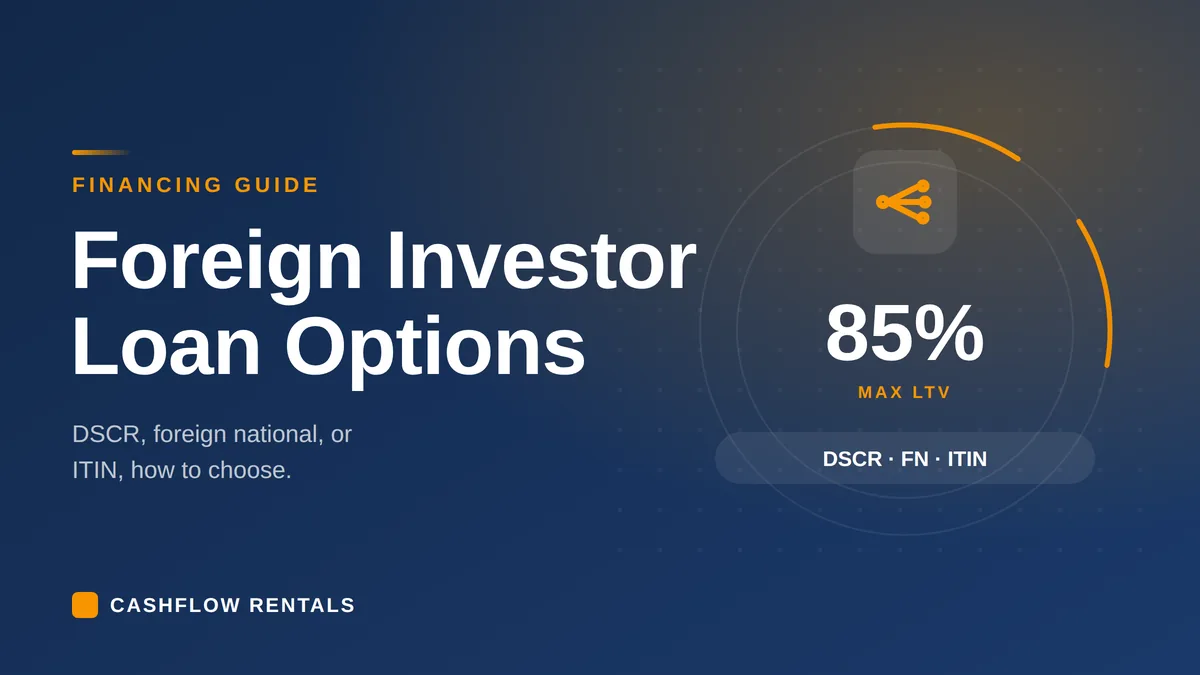
- DSCR reaches about 70 to 75% LTV; foreign national and ITIN often reach 70 to 85%.
- All three usually allow buying inside an LLC, commonly with a personal guarantee.
Which option fits you
A quick map before the detail. DSCR stands for Debt Service Coverage Ratio, and ITIN stands for Individual Taxpayer Identification Number, the tax ID the IRS issues to people who do not have a Social Security Number (SSN).
| Your situation | Best option |
|---|---|
| Buying a rental property | DSCR loan |
| Buying a vacation or second home | Foreign national mortgage |
| You live or work in the U.S. and file taxes with an ITIN | ITIN loan |
DSCR loans (cash-flow based)
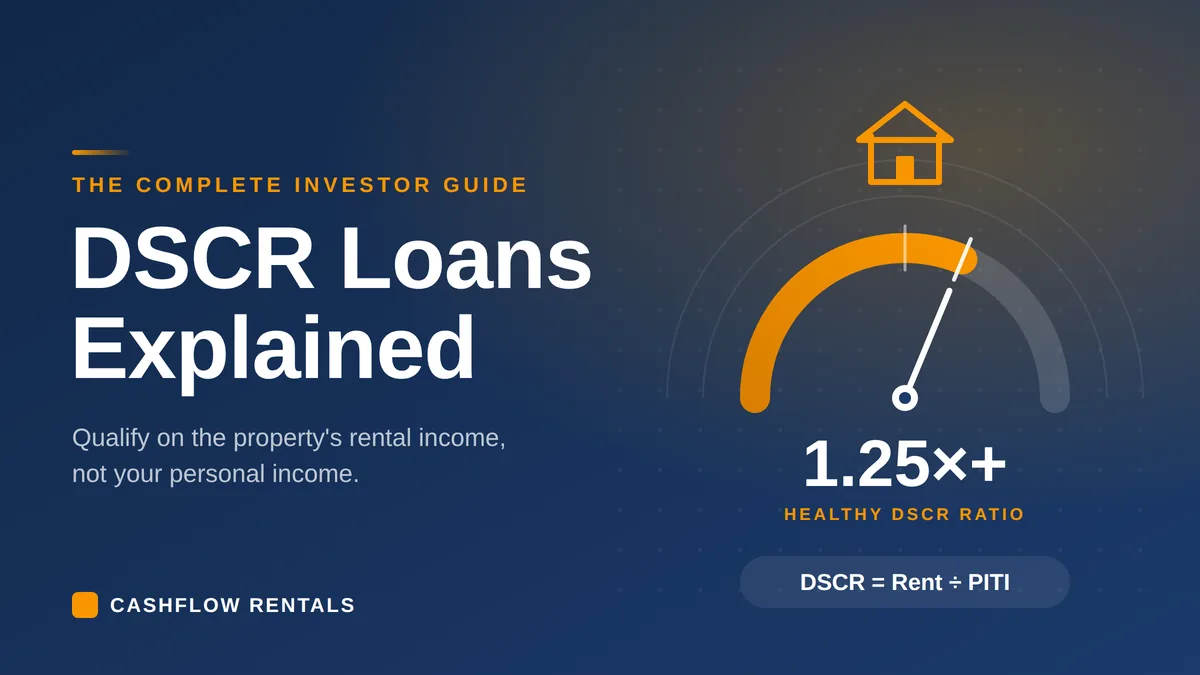
This is the loan I use for rentals. Approval is based on the property's income, not your personal income: lenders want enough rent to cover the mortgage payment, taxes, insurance, and any homeowners association (HOA) fees. Purchase loan-to-value (LTV) typically runs up to about 70 to 75% for non-residents, most programs allow LLC vesting, and there are fixed, adjustable-rate, and interest-only options, with specialist programs for short-term rentals (STRs).
Go deeper: how DSCR loans work, DSCR rates today, and ways to improve your DSCR.
Foreign national mortgages
For non-residents, many lenders offer conventional-style mortgages underwritten on your foreign income and assets from your country of residence. There are fixed and adjustable-rate options, and rates usually sit around 0.25% to 1.5% above what U.S. citizens pay at the time you apply. These suit vacation and second homes especially well.
Start here: foreign national mortgage rates, the lenders list, and the foreign national mortgage guide.
ITIN loans (tax ID based)
ITIN mortgages serve borrowers who already file U.S. taxes with an ITIN. You provide your ITIN assignment letter, bank statements, and U.S. tax returns, and you will usually need a reasonable U.S. FICO credit score. LTV can reach up to about 85%, with pricing tied to your income, LTV, and credit. ITIN loans are best suited to borrowers who live and work in the U.S. but are not citizens.
Side-by-side comparison
| Feature | DSCR loans | Foreign national | ITIN loans |
|---|---|---|---|
| Best for | Non-residents buying rental property | Non-residents using foreign income or assets | Investors who file U.S. taxes with an ITIN |
| Income verification | No personal income; uses property income to qualify | Foreign bank statements and income docs; reserves; references | ITIN documentation; bank statements and/or tax returns |
| Typical LTV | Up to ~70 to 75% | Often ~70 to 85% (by lender, program, country, reserves) | Often ~70 to 85%, varies by state and lender |
| Rates and drivers | DSCR ratio, LTV, prepay terms | Country and AML risk, LTV, asset verification, reserves | LTV, documentation depth, reserves |
| Property types | 1 to 4 units, condos and townhomes, some STRs; some 5+ unit options | 1 to 4 units; condos and townhomes | 1 to 4 units; condos and townhomes |
| Entity (LLC) allowed | Yes | Often allowed; structure varies by lender and state | Often allowed; confirm vesting and closing rules |
| Docs to prepare | Lease or market rent, appraisal, ID, reserves, insurance | Passport or visa, foreign bank statements, asset proof, appraisal, reserves | ITIN letter, bank statements, appraisal, reserves; tax docs if applicable |
How to choose
- Purchase type: buying a rental favors a DSCR loan; a vacation home favors a conventional foreign national or ITIN loan.
- Income evidence: if you are self-employed or your income is hard to document, a DSCR loan (for a rental) sidesteps personal-income proof entirely.
Still deciding between the two most common? See my foreign national DSCR guide for the rental route.
Getting started: docs and timeline
Whichever route you take, prepare the essentials early: identity and entity (passport or visa, and LLC docs if applicable); assets (proof of funds for the down payment, closing costs, and reserves); property (purchase contract, appraisal, insurance); and income as required (rent roll or leases for DSCR, foreign statements for foreign national, ITIN letter and returns for ITIN). For the full list, use my documents checklist.
Wire-safety tip: always confirm wiring instructions by phone with escrow or title using a known number. Do not rely on emailed changes.
When you want help picking the right loan and lining up a specialist broker, you can book a call with my team.
Free Investor Resources
The Foreign Investor Starter Kit
Everything you'll ever need to buy and manage U.S. rental property from overseas safely and with confidence.
Open the Starter Kit
Free to browse. No jargon, no sales pitch.
Frequently asked questions
Can foreign investors get DSCR loans?
Yes. Many DSCR lenders work with non-U.S. residents buying investment property. Qualification is based on the DSCR rather than personal income, with overlays for loan-to-value, reserves, and property type.
Do I need a U.S. credit score or SSN to get a mortgage in the USA?
Foreign National programs generally use passport or visa and foreign documentation, and U.S. credit is not required. ITIN loans serve investors who file with an ITIN and no Social Security Number. Some DSCR lenders do not require U.S. credit either.
Can I buy U.S. property in an LLC?
Often yes, especially with DSCR loans. Many programs allow entity vesting with a personal guarantee, but rules vary by lender and state, so confirm early.
What down payment is typical for foreign nationals in the USA?
Typical loan-to-value ranges are about 70 to 75% for DSCR purchases, and about 70 to 85% for Foreign National and ITIN loans. Cash-out is usually lower. Exact limits vary by lender and scenario.
Written by
David Garner
David is co-founder of Cashflow Rentals and a British investor who has personally purchased more than 120 U.S. rental properties as a foreign national since 2016. He helps overseas investors build U.S. rental portfolios remotely, from his base in Brazil.