Your DSCR is not fixed. It is a number you can actively manage, and moving it even a little can be the difference between a declined deal and an approval, or between an average rate and a great one. Over 120+ of my own purchases, learning to lift a property's DSCR before applying has been the key to unlocking new loans and the best terms.
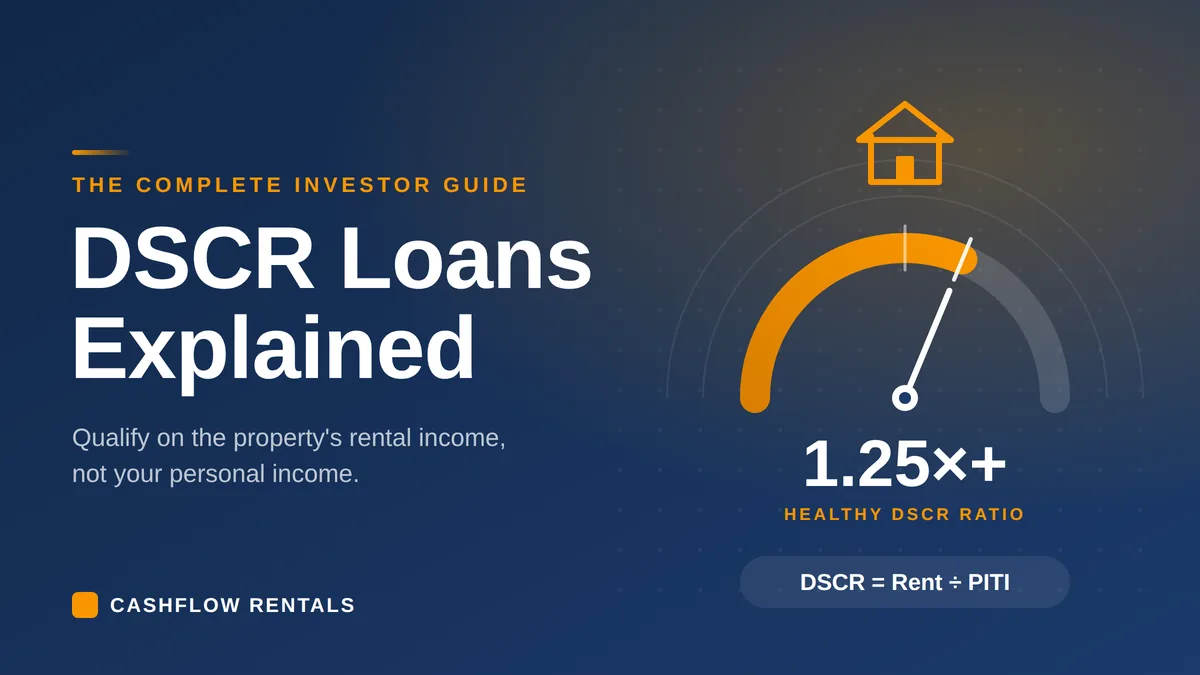
DSCR = Gross Monthly Rent ÷ PITIA (Principal + Interest + Taxes + Insurance + HOA)
There are four levers you can pull: increase the rent, cut the expenses, strengthen your application, and improve the deal structure. Run any property through my DSCR calculator to see where you stand today.
The four core levers
These are the four ways to get a DSCR where it needs to be. It helps to know how DSCR stacks up against other options too: conventional, hard money, and bank statement loans each suit different situations.
Lever 1: increase rental income
Raising the rent directly lifts the top of the DSCR equation. If current rent is below market, bring it up in line with the market (I have even had sellers renew a month-to-month tenant onto a 12-month lease at market rate as part of a purchase). Make small, cost-effective upgrades that justify higher rent, such as adding a washer and dryer, refreshing the kitchen, or improving curb appeal. And look for extra revenue: storage, coin laundry, or pet fees. As an example, if rent rises $50 and insurance drops $25 a month, a 1.19 DSCR becomes about 1.21. Balance maximum rent against tenant turnover, though; a tenant who pays a little less but stays longer usually wins.
Lever 2: decrease operating expenses
Lowering certain expenses cuts your PITIA, which raises the DSCR. Run an expense audit on every bill, and start with landlord insurance, which sits inside PITIA, so a better policy directly improves the ratio.
Lever 3: strengthen your application
DSCR is mostly about the property, but lenders still weigh your file, and a stronger application earns a lower rate, which then improves the DSCR. Improve your credit score, build strong cash reserves, consider a guarantor or a more experienced partner (most lenders require a personal guarantee), and arrive with an organized document package. If your income is hard to document, a bank statement loan may fit better.
Lever 4: improve the deal structure
Even with the property and your file unchanged, a lower monthly payment lifts the DSCR. A larger down payment shrinks the loan and the payment. An interest-only DSCR loan cuts the payment during the interest-only period, and an ARM often starts lower than a 30-year fixed. A rate buydown (paying points up front) can also nudge a marginal deal over the line.
Monthly payment and DSCR: fixed vs interest-only (illustrative, rent $2,200)| Scenario | Payment | + Taxes/Ins/HOA | Total PITIA | DSCR |
|---|
| 30-year fixed at 7.50% | $1,398.43 | $350.00 | $1,748.43 | 1.26x |
| Interest-only (10-yr IO) at 7.75% | $1,291.67 | $350.00 | $1,641.67 | 1.34x |
How rate and payment changes lift DSCR (illustrative)| Scenario | Rate | P&I / mo | Taxes+Ins+HOA | PITIA | Rent | DSCR |
|---|
| Baseline | 8.25% | $1,245 | $355 | $1,600 | $1,900 | 1.19x |
| Buydown, minus 50 bps | 7.75% | $1,180 | $355 | $1,535 | $1,900 | 1.24x |
| Interest-only (10-yr IO) | 8.50% | $1,063 | $355 | $1,418 | $1,900 | 1.34x |
| Rent +$50 and insurance -$25 | -- | -- | $330 | $1,575 | $1,950 | 1.24x |
Not all lenders offer interest-only DSCR programs, and underwriting varies. On down payment, I part ways with the "put down as little as possible" crowd: because I hold long term, I happily trade a larger down payment for better cash flow and a safer equity cushion.
What is a good DSCR?
A higher DSCR is always better: it signals a safer loan, which can earn a lower rate, a higher loan-to-value, and more flexible underwriting.
What is a good DSCR?| DSCR | Coverage |
|---|
| Below 1.00x | Cash flow shortfall, high risk, few lenders |
| 1.00 to 1.09x | Weak coverage, limited programs, tighter pricing |
| 1.10 to 1.24x | Fair coverage |
| 1.25 to 1.49x | Good coverage, a common lender target |
| 1.50x and up | Excellent coverage, best pricing and terms |
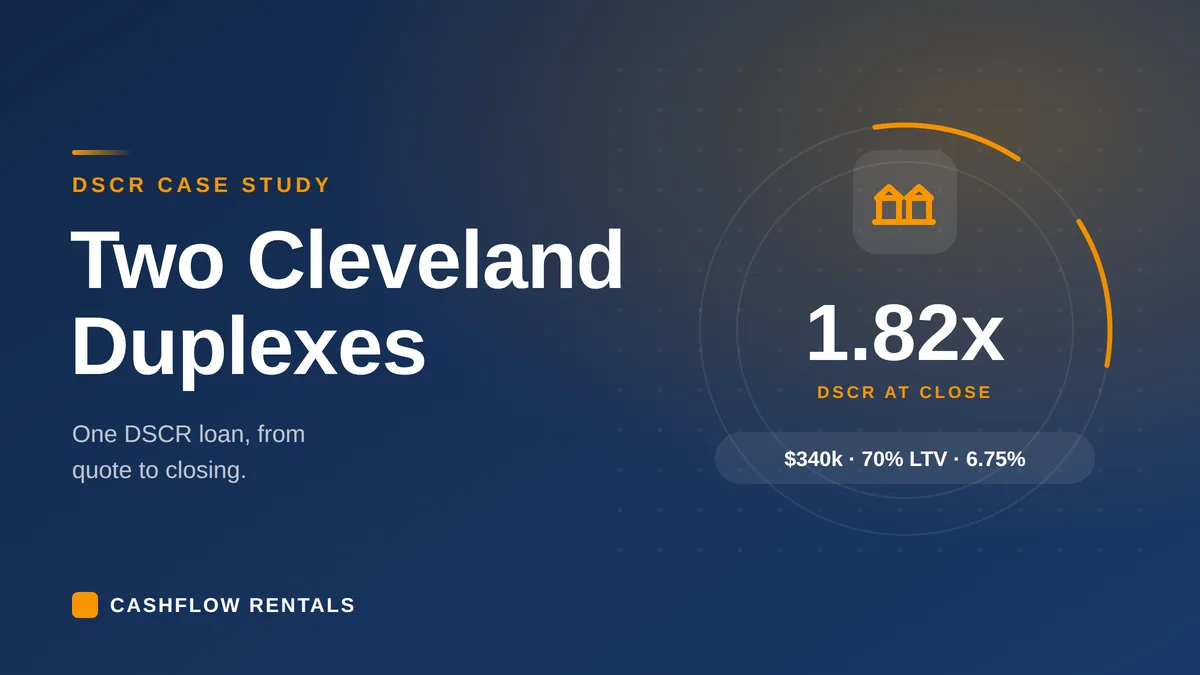
Some lenders accept a ratio below 1.0 with heavy pricing, but most prefer 1.10 to 1.25 or more. Note that a cash-out refinance often requires a higher DSCR and a lower LTV. See how we stress-test a real deal in my Cleveland case study.
Pre-application checklist
Bring the levers together before you submit. A few hours here can save thousands over the life of the loan:
- Calculate your current DSCR so you know your starting benchmark, and model fixed, ARM, and interest-only scenarios.
- Analyze income and expenses: review the lease against market rent, audit expenses (especially insurance), then reassess.
- Check and improve your credit by paying down debt and making on-time payments. Non-residents can skip this; see foreign national DSCR loans.
- Review your financing options: a larger down payment, interest-only, or a buydown.
- Organize your documents so the process runs fast and smooth.
I always look for ways to improve the DSCR before applying and to present the strongest possible deal. It has helped me qualify properties that might not have made it, and win better rates and terms.
Working with the right lender
You do not have to do this alone. A knowledgeable broker who specializes in DSCR loans can be your biggest asset, advising which of the four levers to pull, explaining an interest buydown, and helping you structure the deal. Real estate is a people game, and the right partners are a game changer. When you want an introduction to my brokers, you can book a call.