In a competitive market, a DSCR loan pre-approval in hand is what wins the deal. It is a conditional commitment from a lender, based on a review of the property and your file, that tells a seller you are a serious, qualified buyer, not just someone who has been informally pre-qualified. With organized documents you can have one in 24 to 72 hours.
I have used DSCR loans to buy and refinance all 120+ of my properties, so this is the exact, no-jargon checklist I use to get pre-approved fast and on the best terms.
What is a DSCR pre-approval?
A pre-approval is a conditional commitment from a lender to fund a loan after reviewing property and personal details. It means the lender has pulled your credit and reviewed your key documents, so you are effectively good to go. In a competitive market that tells a seller you are serious and qualified, which gives you a real edge over buyers who are only pre-qualified. It also shows your true borrowing power and the rate you will get, so you can make offers on properties you know you can finance.
Pre-approval vs pre-qualification | Pre-qualification | Pre-approval |
|---|
| What it is | An informal estimate | A documented, conditional commitment |
| Lender review | Basic, self-reported | File reviewed, rent and PITI validated, credit pulled |
| Strength with sellers | Weak | Strong, makes your offer stand out |
| Best used for | A rough sense of budget | Making real offers you can close |
The pre-approval checklist
Getting pre-approved is not as hard as it looks. The key is to arrive prepared, because lenders love clean, organized paperwork. If you are pursuing a cash-out refinance, the criteria differ a little.
Property documents and information
A DSCR loan is approved mainly on the property's rent, so gather these for your target property (or a hypothetical one if you are still searching):
- Projected or current rent: the single most important input. A professional rent analysis (often the appraiser's 1007) works, and a current lease, rent roll, or bank deposits are even better.
- Property taxes: the annual amount, so the lender can compute the PITI.
- Insurance: an estimate, usually a quick call to an agent or an online quote.
- HOA or condo fees: the monthly amount, if the property has them.
Need the ratio? Run any property through my free DSCR calculator.
Your personal financial information
The property leads, but the lender still checks your financial health. No tax returns or W-2s, but you will need:
- Proof of liquidity and reserves: enough to cover the down payment, closing costs, and typically 3 to 12 months of payments, even if the property sits vacant. Bank, investment, or retirement statements all work.
- Credit report: the lender pulls it, and a higher score earns a better rate. For non-residents like me, U.S. credit is not required.
- Investment experience: not always required, but a simple spreadsheet of properties you own can earn better terms.
Be careful sending sensitive personal information to third parties. This space attracts scammers, so read my
red flags guide before you share anything.
How to use it to win deals
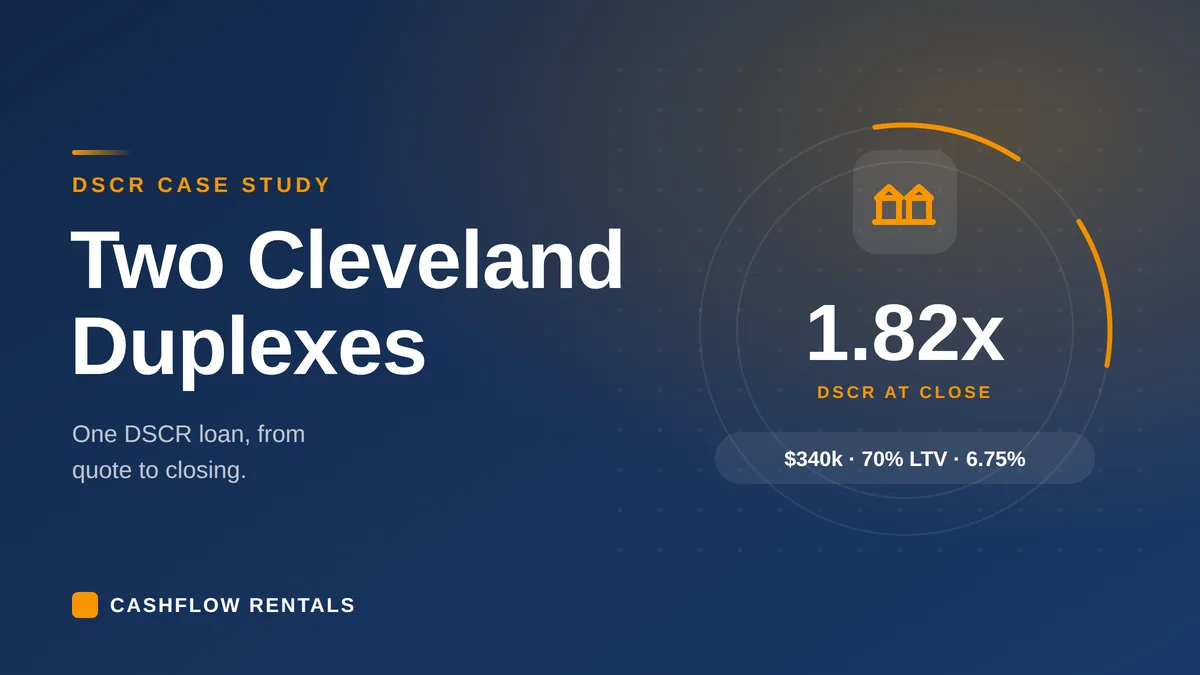
Once the letter is in hand, put it to work. It makes your offer stronger, since a pre-approved buyer is given more weight when a seller is choosing between similar offers. It gives you negotiating leverage, because showing you are ready to close can win a shorter closing period, a better price, or a seller concession. And it lets you act quickly and confidently the moment a good deal appears. See a real pre-approved and funded deal in my Cleveland case study.
Common reasons for denial
Even a strong file can trip on a few common pitfalls:
- Low DSCR: lenders want at least 1.0, and most prefer 1.2 or higher. If a deal is borderline, see how to improve the DSCR.
- Insufficient reserves: not enough liquidity for the down payment, closing, and a few months of payments.
- Low credit score: DSCR is asset-based, but credit still matters for pricing. Non-residents can qualify without U.S. credit, usually at a higher rate.
- Property condition or type: heavy fixers and niche properties often do not fit; use hard money to buy and renovate, then refinance into DSCR.
- Loan size: most lenders want a minimum around $100,000 (some go to $75,000). Buying very cheap is rarely a good long-term wealth strategy.
When to get it and how long it lasts
The best time to get pre-approved is before you start actively searching, though for DSCR the lender needs property details, so you will identify a subject or hypothetical property first. Get it before making offers (and decide your fixed vs ARM structure), when rates are trending down, or ahead of a refinance with a balloon coming due. Most pre-approvals last 60 to 90 days; to renew, refresh your asset statements, credit, current rent or 1007, and PITI inputs, plus any updated entity or KYC documents. Set a reminder to renew at day 45 so your buying power never lapses.
Choosing the right lender
The right lender or broker saves you time, money, and deals. Prioritize turnaround time (ask their typical SLA for a pre-approval letter, often 24 to 72 hours), experience with your property type and borrower profile (including non-residents), and competitive pricing across rate, LTV caps, DSCR bands, reserves, fees, and prepayment terms. Real estate is a team sport, so pick your team wisely. When you want an introduction to my brokers, you can book a call.