Turnkey rental property can be an efficient way to scale a portfolio, but only if you verify the provider, the rehab, and the numbers. I have acquired 120+ U.S. rentals as a non-resident, and turnkey has been a big part of that, with plenty of wins and a few expensive mistakes. This is the practical checklist I now use on every deal: what to request, the red flags to watch for, how to read a pro forma, and how to model DSCR financing so the investment actually performs.
Buying

Turnkey Property Due Diligence Checklist
Turnkey can scale a portfolio fast, or cost you thousands. This is the checklist I use on every deal: vet the provider, verify the house, validate the numbers, and protect the closing.
David Garner · Co-Founder
Key takeaways
- Work in three phases: vet the provider, verify the property, then pressure-test the numbers.
- Always get your own independent inspection and a sewer scope, never rely on the seller.
- Rebuild the pro forma with real vacancy, PM, maintenance, and CapEx reserves.
- Target a DSCR of about 1.20 to 1.25 or higher on realistic figures.
- If the deal only works on perfect assumptions, walk away.
The 3-phase due diligence framework
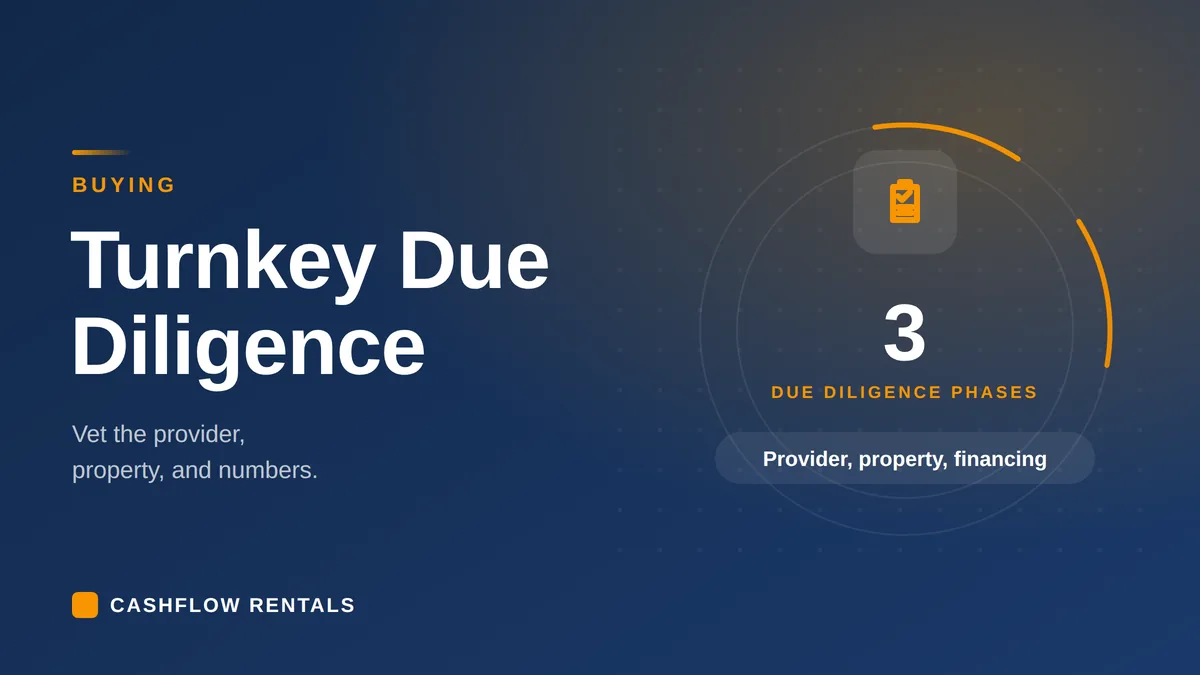
With turnkey you rely on the provider for everything: sourcing, renovation, tenant placement, and property management. So I break due diligence into three phases. Phase 1 screens the provider, Phase 2 validates the property, and Phase 3 pressure-tests the plan and financing so the deal survives real-world assumptions.
- Phase 1, the provider: background, licensing, written rehab standards, warranty terms, property management, and proof (3 to 5 recent deals showing pro forma vs 12-month actuals).
- Phase 2, the property: independent inspection plus a sewer scope on older homes, scope verification against dated photos and invoices, investor-rate taxes and insurance, and rent checked against true comps.
- Phase 3, plan and financing: underwrite with reserves, target a healthy DSCR, and run sensitivity tests (+50 bps on rate, +10% on taxes and insurance, -5% on rent).
Vetting the provider
Because turnkey selling is profitable, there are bad actors in the market, and in my experience the operator matters as much as the house. Before you sign a contract or wire an earnest money deposit, confirm the provider's people, process, and proof, in writing.
| Criterion | What to ask | Target / pass |
|---|---|---|
| Company background | Years operating, principals' track record, licensing | 3+ years, active license, insured |
| Complaints and reviews | BBB and state complaints, online reviews | No unresolved serious issues |
| Rehab standards | Written thresholds, dated photos, permit list | Published scope, permits where required |
| Warranty terms | Length, coverage, exclusions, response times | 12 months+, clear claim process |
| Property management | In-house or partner, fees, KPIs | 8 to 10% management, KPIs shared monthly |
| Pro forma realism | 3 to 5 deals: pro forma vs 12-month actuals | Within about 10 to 15% on NOI |
| References (recent) | 2 to 3 buyers from the last 6 to 12 months | Verifiable, candid feedback |
The single best question in the interview: "Show me three addresses you sold in the last 12 months, with the pro forma the buyer received and the actual 12-month profit-and-loss and rent roll." If they cannot produce it, proceed with caution.
Property-level checks
Even with a trusted company, verify the house, not the brochure. A cash-only, as-is turnkey offer is a big red flag, always keep inspection contingencies in the contract.
- Independent inspection: full home inspection (roof, foundation, moisture, electrical, plumbing, HVAC, windows), plus a sewer scope on older housing stock, and environmental checks where age or market warrant.
- Scope of work: a signed, line-item scope showing what was repaired versus replaced, with dated before-and-after photos matching the address, permits where required, and contractor invoices.
- Rent and occupancy: if occupied, the lease, rent ledger, deposit transfer, and a signed tenant estoppel; if vacant, 3 to 5 true comps (same bed/bath, condition, school zone within about a mile).
- Taxes and insurance: model taxes at investor rates post-sale (not the seller's homestead bill), and get a real landlord policy quote checking wind, hail, and flood exposure.
| System | Typical life | Check on the property |
|---|---|---|
| Roof (asphalt) | 18 to 25 years | Age, condition, estimated remaining life |
| HVAC (split) | 12 to 18 years | Age, condition, estimated remaining life |
| Water heater | 8 to 12 years | Age, tank or tankless |
| Electrical panel | 20 to 30 years | Amps, breakers, GFCI/AFCI |
| Plumbing | Varies by material | Copper, PEX or galvanized, leaks, sewer scope |
| Windows | 20 to 30+ years | Single or double pane, seal failure |
Walk away if you are not allowed an independent inspection, if the rent sits above the comp range with no justification, if a sewer scope reveals major issues with no credible remedy, or if the warranty is vague with no service levels. The seven questions I'd ask about that warranty are the fastest way to find out which kind you have.
Pro forma reality checks
This is where most deals fall apart. Underwrite with your assumptions, not the brochure, because turnkey pro formas often leave out real-world costs like vacancy and capital expenditure. When you apply real numbers, a lot of these "high cash flow" properties do not actually cash flow.
- Vacancy: 5 to 10%. Higher on small units and duplexes.
- Property management: 8 to 10% of collected rent, plus leasing and renewal fees.
- Maintenance: 10% or more (older stock needs more).
- Capital expenditure: 10% for big-ticket items over time.
- Taxes and insurance: investor rates, post-sale.
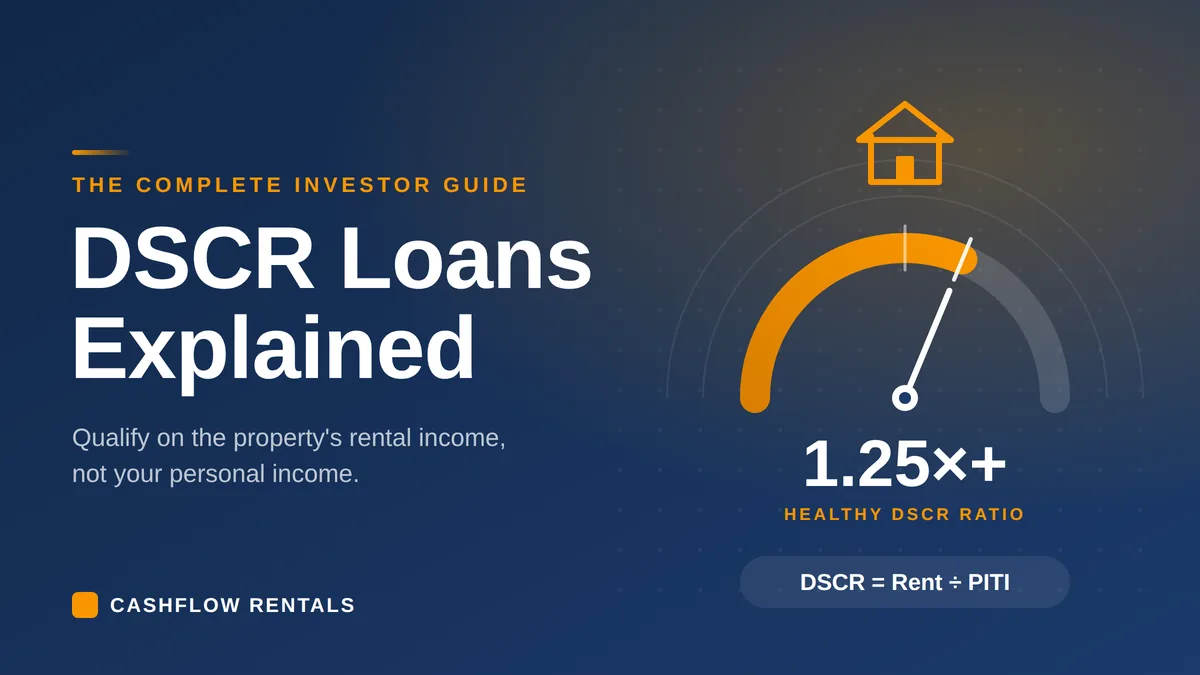
- DSCR: net operating income divided by PITIA (principal, interest, taxes, insurance, association dues).
Worked example: rent $1,900, less 6% vacancy gives effective income of $1,786. Take out property management ($171), maintenance ($143), and capital expenditure ($107), and net operating income is about $1,365. If your PITIA payment is $1,150, the DSCR is roughly 1.19. That is a bit under my 1.20 to 1.25 target, so I would tighten the numbers or restructure the loan. Model it in the DSCR calculator.
Aim for a DSCR of about 1.20 to 1.25 or higher on realistic figures, and be wary of any deal that only works on a teaser rate. Test fixed versus ARM (adjustable-rate mortgage) and interest-only structures, and match the loan and any prepayment penalty to your hold plan. If the numbers are tight, see how to improve your DSCR, and check current ranges in the DSCR rates guide.
Title, legal, and closing
Turnkey deals move fast, so protect yourself before closing. Order a full title search (open liens, code violations, unpaid utilities, open permits) and an owner's title policy. Confirm your LLC name matches the deed, insurance, and lender documents. If a tenant is in place, get the executed lease, rent ledger, deposit assignment, and a signed estoppel. And critically, verify wire instructions by phone using a known number, never from the email thread, then review the closing statement line by line.
Common red flags
Great turnkey deals survive scrutiny. If something feels off, it usually is. Here is how to separate the marketing claim from the reality.
| Marketing claim | What to verify | Action |
|---|---|---|
| "Fully renovated" | Signed scope, permits, dated before/after photos, invoices | Match scope to inspection; price in CapEx for any gaps |
| "Rents at $X" | 3 to 5 true comps, days on market, lease and ledger if occupied | Underwrite at a conservative rent if comps do not support it |
| "Great cash flow" | Vacancy, PM, maintenance, CapEx, investor taxes and insurance | Rebuild the budget; test DSCR on fixed vs ARM vs interest-only |
| "We stand behind our work" | Written warranty length, coverage, response times | Add a warranty addendum or adjust price/escrow holdback |
| "Easy closing" | Neutral escrow, inspection and title outs, wire call-back | Do not waive contingencies; verify wire instructions by phone |
If any assumption must be perfect for the deal to work, pause. Adjust the price, an escrow holdback, or the loan structure until the math holds under stress, or walk away. As one of my mentors says, I would rather overpay for the right property than get a discount on a headache.
Ready to put this to work? Start with my vetted list of turnkey companies, model the numbers in the DSCR calculator, and when you want a second opinion you can book a call.
Free Investor Resources
The Foreign Investor Starter Kit
Everything you'll ever need to buy and manage U.S. rental property from overseas safely and with confidence.
Open the Starter Kit
Free to browse. No jargon, no sales pitch.
Frequently asked questions
What is a turnkey rental property?
A turnkey rental is a property marketed as ready to rent, often recently renovated with property management already in place. Always verify the rehab scope, permits, and rent assumptions before you commit, because the label does not guarantee quality.
How do I vet a turnkey real estate company?
Ask for 3 to 5 recent deals showing the pro forma versus the actual 12-month results, plus written rehab standards and warranty terms. Check licensing, complaints, and references from buyers who closed within the last year, not just longtime advocates.
Which documents should I request before wiring earnest money?
The purchase agreement with inspection and title contingencies, a signed scope of work, dated before-and-after photos, permits where required, and contractor invoices. If the property is tenant-occupied, also get the lease, rent ledger, and a signed tenant estoppel.
What inspections are non-negotiable?
Always order a full independent home inspection and a sewer scope on older housing stock, never rely on the seller's reports. Add environmental or specialty inspections when the age, market, or disclosures point to elevated risk.
How do I confirm the advertised rent is realistic?
Pull 3 to 5 true comparables that match bed and bath count, condition, and school zone within about half a mile to a mile, and review days on market. If occupied, verify the lease and rent ledger; for short-term rentals, confirm licensing and seasonality.
What expenses belong in a realistic pro forma?
Vacancy, property management, maintenance, capital expenditure, and investor-level taxes and insurance, plus any HOA or landlord-paid utilities. Never use the seller's homestead tax figure or an introductory insurance quote, as both understate your real costs.
What DSCR should I target on a turnkey rental?
Most lenders look for a Debt Service Coverage Ratio of roughly 1.20 to 1.25 or higher, depending on the program and loan-to-value. If it is tight, test interest-only or an ARM structure, but be wary of any deal that only works on a teaser rate.
What are the biggest red flags in turnkey deals?
Cosmetic-only rehabs, rent claims above the comparables, homestead taxes used in the pro forma, vague warranty terms with no service levels, and any refusal to allow an independent inspection. If you cannot verify a claim, renegotiate or walk away.
Written by
David Garner
David is co-founder of Cashflow Rentals and a British investor who has personally purchased more than 120 U.S. rental properties as a foreign national since 2016. He helps overseas investors build U.S. rental portfolios remotely, from his base in Brazil.