If you are thinking of buying real estate in the U.S., getting your down payment and closing funds into a US bank account is one of the most practical steps in the purchase process, and one that catches a surprising number of Canadian investors off guard. The process itself is not complicated. International wire transfers happen every day, and we have helped lots of Canadians successfully close on their U.S. property investments. Two things cause the real problems: not having your source of funds documented before the lender asks for it, and not leaving enough time for everything to clear before the closing deadline. Both are entirely avoidable, if you know how to go about things. In this guide I want to walk you through exactly what to expect, what to prepare, and how to make sure your funds are in the right place at the right time.
How to Move Money from Canada to the US to Buy Property
This is the step that trips up more Canadian investors than almost anything else in a purchase. Here is exactly how I get funds from Canada into a US account, what to prepare, and when, so your money is in the right place before closing.

Key takeaways
- Your down payment, closing costs, and reserves all need to be in a US bank account before closing. Funds held in Canada do not count.
- The lender will require documentation proving where your funds came from. This is anti-money laundering compliance, not a personal investigation.
- Funds from multiple sources, recent investment sales, or remortgages require more documentation. Prepare it before you go under contract, not after.
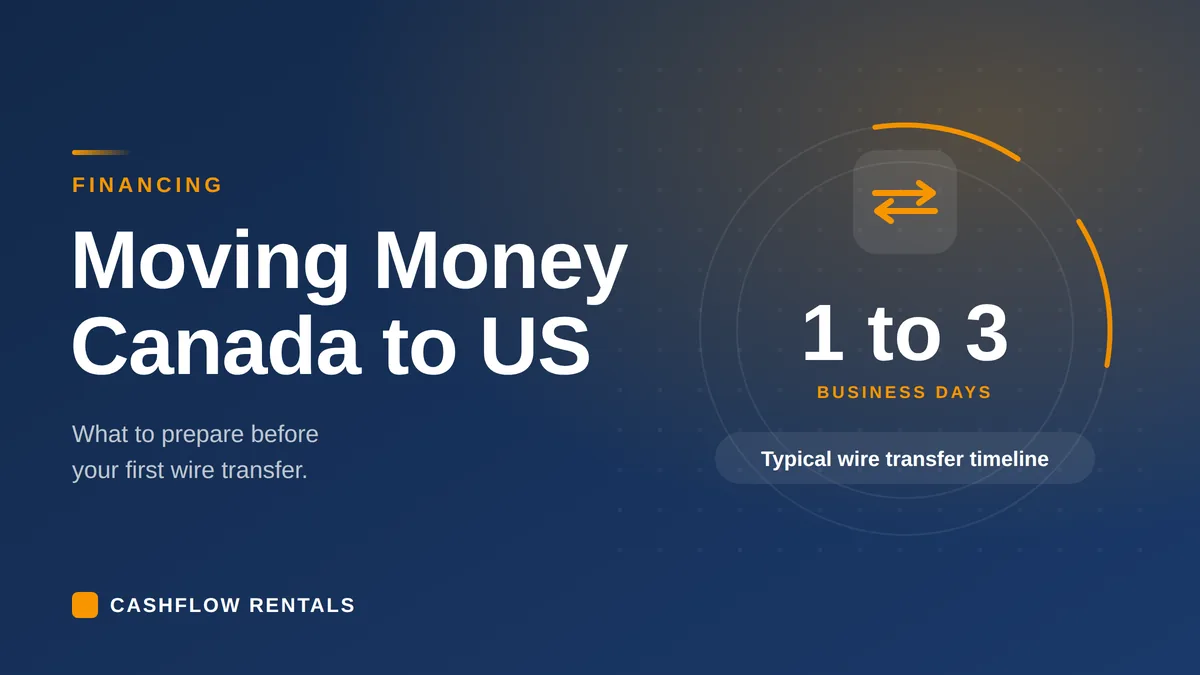
- International wire transfers typically take 1 to 3 business days. Start early, because closing deadlines are firm.
- Build a 2 to 3% currency buffer into your transfer amount to account for exchange rate movement.
Why your funds need to be in a US account
Your lender will not accept funds wired directly from a Canadian bank account on closing day. The down payment, closing costs, and reserves all need to be demonstrably sitting in your US business bank account before the lender will proceed to closing.
This is not just a lender preference. It is part of the anti-money laundering compliance process. The lender needs to verify the source of funds, and that verification happens before closing, not on the day.
Reserves in particular should be in your US account. I covered this in my guide to how much money you will need, but it is worth repeating: some lenders will not let you point to funds in a Canadian account and say they are available if needed. They may need to be in the US account at the time of the closing review.
How much to transfer
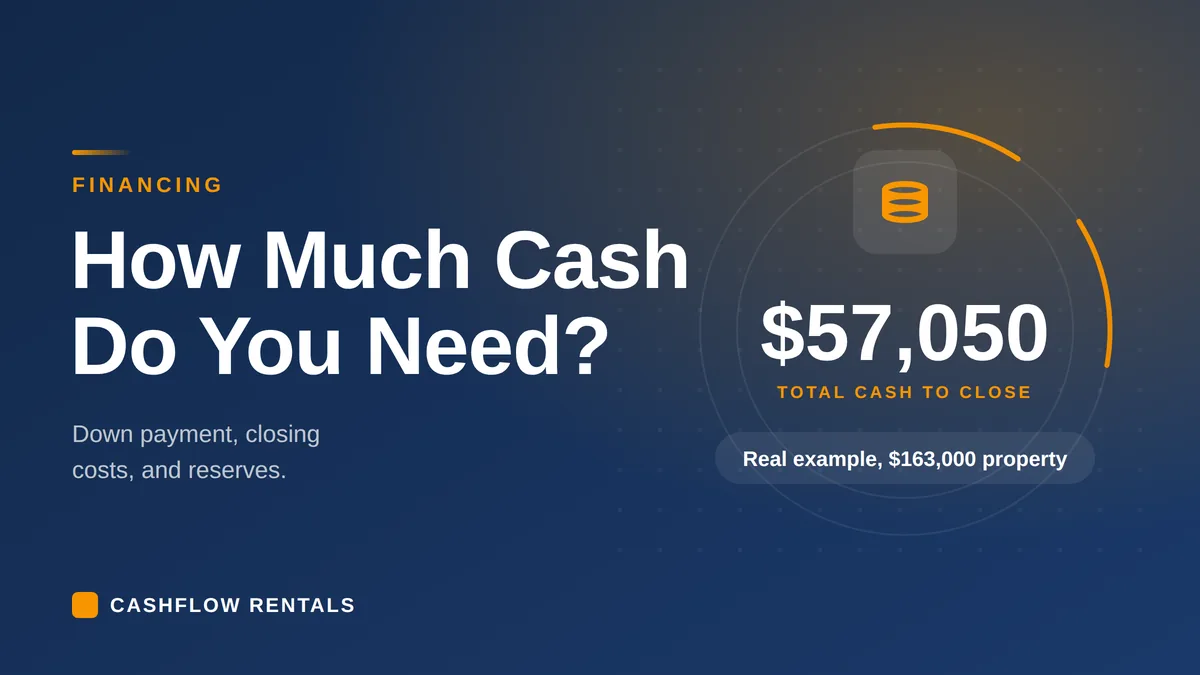
Before you transfer anything, know your number. The total you need to have in your US account at closing is your down payment (30% of purchase price at 70% LTV), closing costs (approximately 5% of purchase price), reserves (3 months of mortgage payments with our specialist lender), and a currency conversion buffer of 2 to 3%.
On a $185,000 property, that is approximately $67,710 USD plus a buffer of around $2,000, so you would want to transfer approximately $70,000 USD equivalent from Canada. For the detailed breakdown by price point, see my guide to how much money Canadian investors need.
Opening your US bank account
Before you can transfer anything, you need somewhere to transfer it to. Your US business bank account is opened in the name of your LP or LLC, not in your personal name. The sequence is:
- Form your LP or LLC in the correct US state.
- Obtain your EIN, the federal tax identification number.
- Open the US business bank account using the entity documents and EIN.
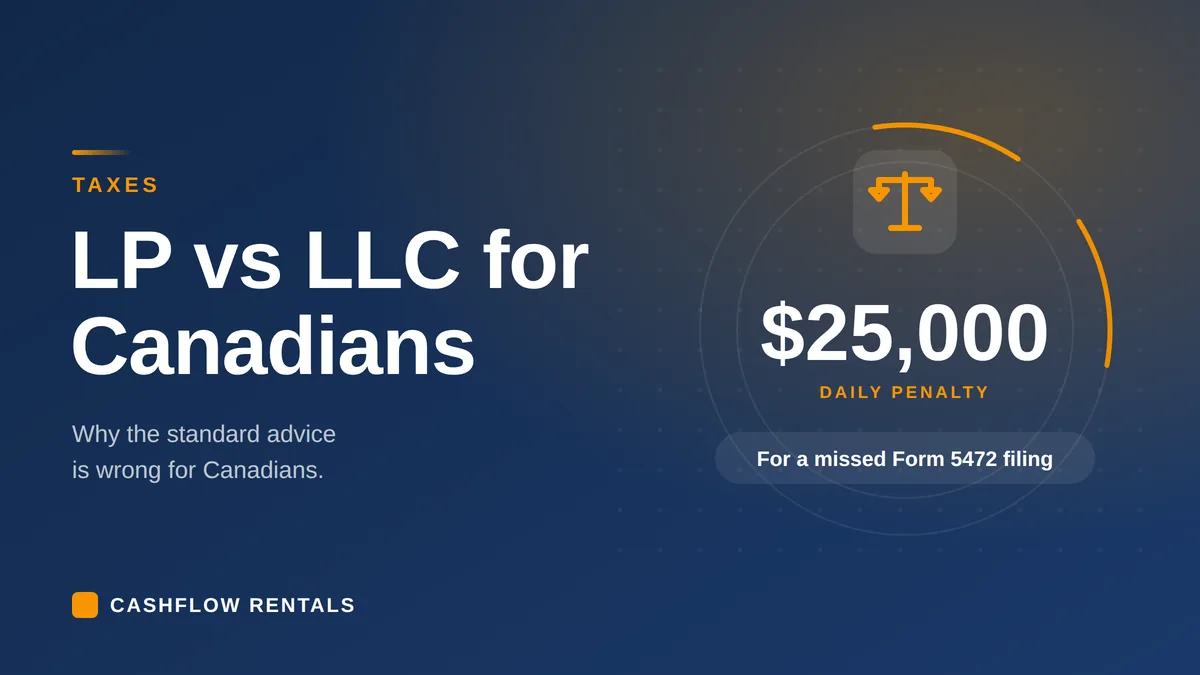
For Canadian investors, the LP is the right structure in most cases, but make sure to speak to a qualified cross-border tax attorney or CPA for advice specific to your situation. I covered this in detail in my guide to LP vs LLC for Canadians.
Opening a US business bank account for a foreign national owned U.S. legal entity is easier than most people expect, provided you have the entity documents and EIN in place. That said, I have seen plenty of accounts denied over very simple mistakes, like using your registered agent's address as your principal business address. Banks do not like that.
The anti-money laundering process
When you wire a significant sum from Canada to the US, several things happen automatically that are worth understanding.
In Canada, financial institutions are required to report international electronic fund transfers of $10,000 CAD or more to FINTRAC, the Financial Transactions and Reports Analysis Centre of Canada. This is not a problem, it is a standard reporting requirement. FINTRAC provides guidance on reporting obligations at fintrac-canafe.gc.ca.
On the US side, your lender is required by federal anti-money laundering regulations to verify the source of the funds being used for the purchase. They are not investigating you personally. They are following a compliance process that applies to every foreign national purchase.
What this means in practice is that before the lender approves your closing, they will ask you to demonstrate where your down payment and closing funds came from. The more straightforward your funds trail, the faster this goes.
This also applies to banks. I often see clients' wires get frozen between Canada and the US while the receiving bank asks for verification of both the source of funds and their intended use. This is not usually a showstopper, but it can be a very unpleasant surprise if you are not expecting it.
Source of funds documentation you need
The documentation required depends on where your funds came from. Here is what a lender will typically want to see for each source.
| Where the funds came from | What the lender will want to see |
|---|---|
| Savings built up over time | 3 to 6 months of bank statements showing regular deposits and a clear pattern of accumulation |
| Remortgage or home equity loan on a Canadian property | The loan agreement showing the amount borrowed and the funds arriving in your account |
| Sale of investments (stocks, mutual funds, other assets) | The trade confirmation or account statement showing the sale proceeds, plus later statements if the sale was months earlier |
| Gift from a family member | A signed gift letter confirming it is a gift and not a loan, plus bank statements showing the transfer |
| Multiple sources combined | Documentation for each separate source, so the lender can trace every dollar back to its origin |
Whatever the source, start gathering this documentation before you go under contract. Once you are under contract, you are working against a closing deadline, and having your paperwork ready in advance removes the most common cause of delays.
The spaghetti problem
This deserves its own section because I have seen it cause significant delays. If you have been actively managing your money, trading equities, moving funds between accounts, taking out and repaying loans, or receiving income from multiple sources, your funds trail can look like a plate of spaghetti to a lender's compliance team.
One of my Canadian clients, Ronald, had funds coming from more than one source for his first purchase. It took time to document each one, and it caused some delays in the process. Everything resolved successfully, but it added stress and took longer than it needed to.
I have also worked with a European client who had eight separate bank accounts, had been actively buying and selling equities for months, and had moved substantial sums between accounts. By the time he was under contract, his funds trail was genuinely difficult to follow. We had to work with him to produce a comprehensive accounting analysis that traced every significant movement back to its original source before the lender was satisfied.
The more complex your financial history, the earlier you need to start preparing your documentation. Do not wait until the lender asks. Have it ready before you make an offer.
How long transfers take
International wire transfers from Canadian banks to US bank accounts typically take 1 to 3 business days once the transfer is initiated. Some banks are faster, and some have additional verification steps that add time. Factor in the following when planning your timeline:
- Your Canadian bank may place a hold on large outbound international transfers for up to 24 hours for verification.
- The receiving US bank may place a hold on incoming international wires for 1 to 2 business days before the funds are available.
- Transfers initiated on Fridays may not clear until the following week.
- Some banks require additional documentation for transfers above certain thresholds.
As a rule of thumb, initiate your transfer at least 5 to 7 business days before the closing date. This gives you enough buffer to deal with any unexpected delays without missing the closing deadline. All that said, I have also seen wires show up within a few hours. In reality there do not seem to be any hard and fast rules, so it is always best to hope for the best but plan for the worst when it comes to timing.
Exchange rates and timing
The CAD to USD exchange rate fluctuates daily. A move of 2% in the rate is not unusual, and on a $70,000 transfer, 2% is $1,400. A few practical points:
Budget at a slightly unfavorable rate. When calculating how many Canadian dollars you need to transfer, use a rate that is 2 to 3% worse than the current mid-market rate. This buffer means you will have enough even if the rate moves against you before you transfer.
Do not try to time the market. Waiting for a better rate is a reasonable instinct, but it can backfire. The same instinct costs people money in the other direction too, every time the rent comes home. If the rate moves against you while you are waiting and you miss your closing deadline, the consequences are much more expensive than a slightly unfavorable exchange rate.
Consider a forward contract for large amounts. Some currency brokers allow you to lock in an exchange rate in advance for a future transfer. This can be useful if you are several weeks out from closing and want certainty on your rate. Your bank or a specialist currency broker can arrange this.
The Bank of Canada publishes daily exchange rates at bankofcanada.ca, which is a useful reference for budgeting.
Wire transfers and what lenders accept
Your lender will require funds to arrive in escrow via wire transfer. Personal checks and credit card payments are usually not accepted for closing funds. Sometimes bankers drafts from US banks are acceptable as certified funds.
The wire transfer needs to come from your US business bank account, the account held in the name of your LP or LLC that is buying the property. This is why the sequence matters: entity first, EIN second, US bank account third, then transfer funds from Canada.
When you wire from your Canadian bank to your US business account, keep the wire confirmation as part of your documentation. This is another link in the source of funds chain.
What happens if funds arrive late
Closing dates in US real estate contracts are firm. If your funds do not clear by the closing date, the transaction can fail. In most cases the seller will grant a short extension, but they are not obligated to and some will not.
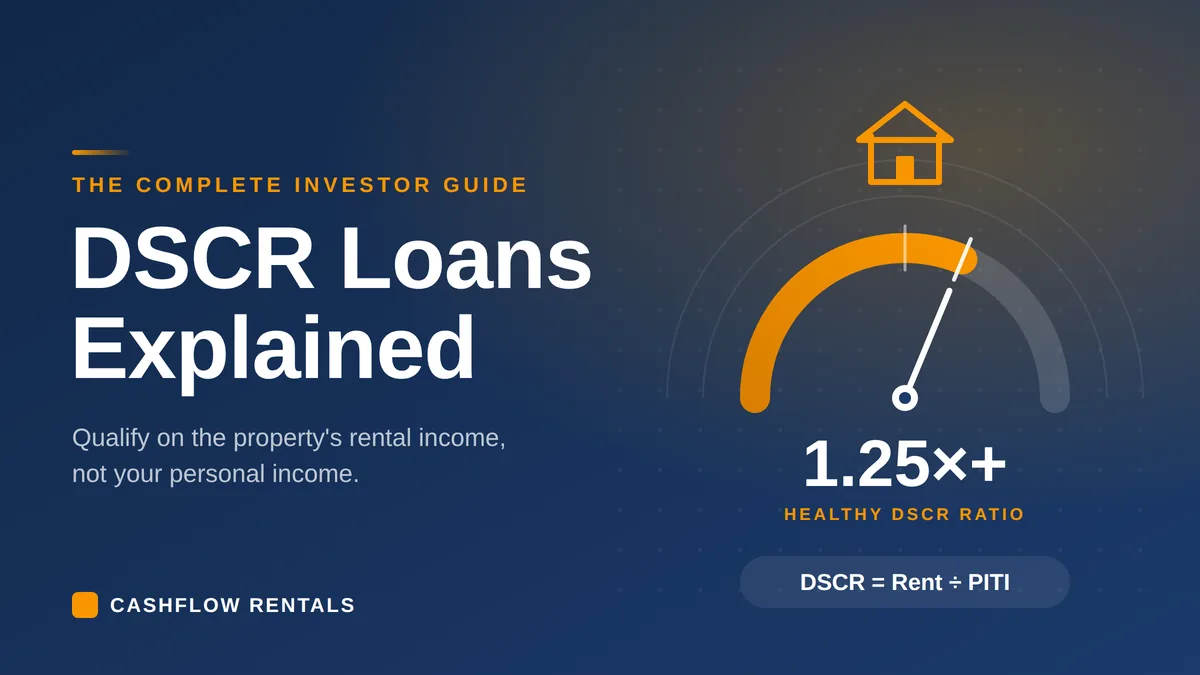
We coordinate the timing of fund transfers for all of our clients as part of the purchase process, making sure transfers are initiated with enough lead time and that the lender has everything they need before the closing deadline. If you would like to understand how the full process works from offer to closing, see my guide to DSCR loans for Canadians.
Getting started
The best time to start preparing your source of funds documentation is before you start looking at properties. By the time you go under contract, you want your paperwork ready to submit immediately rather than scrambling to gather it while the clock is ticking.
The Foreign Investor Starter Kit includes my complete guide to the purchase process, covering everything from entity setup to closing day. If you have a complex funds situation, multiple accounts, recent investment sales, or funds coming from more than one source, book a call with me before you start and we can work through what documentation you will need in advance.
The Foreign Investor Starter Kit
Everything you'll ever need to buy and manage U.S. rental property from overseas safely and with confidence.
Frequently asked questions
Can I transfer funds from my personal Canadian bank account rather than a business account?
You can transfer funds from your personal account to your US business account. The key is that the funds must end up in the US business account before closing. Keep records of every transfer as part of your source of funds trail.
Is there a limit on how much I can transfer from Canada to the US?
There is no legal limit on the amount you can transfer internationally from Canada. However, large transfers will trigger reporting requirements and may require additional verification from your bank. Your bank may also have its own daily or per-transaction limits for international wires.
Do I need to declare the transfer to the CRA?
Transferring money internationally is not itself a taxable event. However, if the funds represent income or capital gains, those may need to be reported separately. Speak to your cross-border CPA about the tax implications of your specific situation.
What if my funds are currently invested in RRSPs or TFSAs?
Withdrawing from an RRSP has tax consequences in Canada. TFSAs can be withdrawn without penalty. The tax implications of using registered account funds for a US property purchase are worth discussing with your cross-border CPA before you make any withdrawals.
Can I use a currency broker instead of my bank for the transfer?
Yes, and for large transfers a specialist currency broker often offers better exchange rates and lower fees than a bank. The funds still need to arrive in your US business account before closing. Ensure the broker can meet your timing requirements and that you keep full records of the transfer.
What if the exchange rate moves significantly between when I budget and when I transfer?
This is why building a 2 to 3% buffer into your transfer calculation matters. If you are concerned about a large rate move on a significant sum, ask your bank or currency broker about a forward contract that locks in today's rate for a future transfer.
David Garner
David is co-founder of Cashflow Rentals and a British investor who has personally purchased more than 120 U.S. rental properties as a foreign national since 2016. He helps overseas investors build U.S. rental portfolios remotely, from his base in Brazil.