Do foreign owned US LLCs still have to file BOI reports?
No. If your LLC was formed in a US state, it has no BOI report to file. That is true whether you're German, Canadian, Taiwanese or anything else, and it has been true since 14 August 2026.
BOI stands for beneficial ownership information. Put simply, it's a filing that tells the US Treasury who really owns a company. It came from a law called the Corporate Transparency Act.
The rule that created the panic in 2024 no longer reaches you. FinCEN's own announcement says so plainly, and the final rule took effect the day it was published.
I want to be careful here, because this is days old at the time of writing and the wider law is still being argued over in court. I'll come back to that at the end.
What actually changed on 14 August 2026?
The short version is that a temporary fix became permanent.
From January 2024, most US companies had to report their owners to FinCEN. That included the LLCs my clients use to hold rental property. The penalties were steep and the deadlines were tight, so the advice industry did what it does and sold a lot of filings.
In March 2025, FinCEN issued an interim rule that took US formed companies out of the system. Interim is the key word. It could have been reversed, and plenty of people kept filing because nobody was sure.
The August 2026 rule makes that permanent. It also does three more things worth knowing:
- US persons who hold a FinCEN ID no longer have to keep it updated.
- Foreign companies that do still report have stopped reporting their US owners.
- FinCEN will delete records it already holds on US companies and US people.
That last one matters more than it looks, and it's the answer to the question I get asked most.
Who still has to file a BOI report?
One group, and it's a narrow one. A company formed under the law of another country, which has then registered to do business in a US state.
Think of a German GmbH that registers in Ohio, or a UK limited company that registers in Texas. This is one of the reasons most of my overseas clients form the company in the US in the first place. The company itself was born abroad. Registering it in a state does not make it American, so it stays inside the rules and reports its non-US owners.
Your Ohio LLC is not that. It was formed in Ohio. It's a US company with a foreign owner, and the owner's passport doesn't change where the company was born.
This trips people up because it feels like it should work the other way round. Most of us assume the rules follow the person. Here they follow the paperwork.
If you're weighing up a US LLC against a home country company for a rental purchase, I've covered that trade in my guide to how to structure your US property investment, and there's a UK specific version in buying US property through a UK limited company. Canadians usually ask about the LP versus LLC question instead.
I already filed a BOI report. What happens now?
Nothing. You don't have to withdraw it, correct it or update it.
FinCEN has said it will delete the information it holds on US companies and US people. So the record you filed is on its way out of the database on its own.
Here's the story I promised. One of my clients in Germany, who bought rental property in Cleveland and later in Kansas City, asked me to file a BOI report for his LLC. At the time I told him honestly that I thought the requirement probably wouldn't survive. The law was being fought over in court and I said so.
He wanted it done anyway. So we filed it on his behalf. You can read what he actually bought in his case study.
I don't tell that as a cautionary tale, because it isn't one. I gave him my honest read, he made his own call, and the work got done properly. He lost an hour of admin and nothing else.
The people I'd worry about are different. There's the buyer still paying a service every year to file something that no longer exists. And there's the buyer who reads a headline like this one, feels relieved, and has never heard of Form 5472.
What about the real estate reporting rule?
This is a different rule and the two get mixed up constantly, so it's worth separating them.
FinCEN wrote a rule requiring reports on certain all cash residential purchases made by companies and trusts. It started on 1 March 2026. On 19 March 2026 a federal court in Texas struck it down, in a case called Flowers Title Co. v. Bessent.
FinCEN and the Department of Justice have appealed to the Fifth Circuit. While the court order stands, FinCEN's own guidance says no reports are required and nobody is liable for not filing one. FinCEN has also said that if the rule comes back, it won't ask for reports covering the period when the order was in force.
Two things to hold onto. First, the appeal is live, so this could change. Second, even when the rule was running, the filing was never yours. It fell on the title company or closing agent, not on the buyer. It's still worth understanding what it asks for, because it shapes the questions your closing team asks about your money, and it sits alongside every other line on your settlement statement.
So does my LLC have no federal filing at all?
No, and this is the part of the article I'd most like you to read twice.
If you own a single member US LLC as a non-US person, you almost certainly have to file Form 5472 every year, attached to a stripped down Form 1120. The trigger isn't profit. It's money moving between you and the LLC, and putting the deposit in counts as exactly that. So it applies in a year the LLC earned nothing. I've written the whole thing up in the $25,000 form nobody mentions when they tell you to form an LLC. You'll need the LLC's EIN to file it, which is the same number you needed to open the bank account before your loan.
The penalty starts at $25,000 per form, per year. There's no cap. If the IRS sends you a notice and you don't fix it within 90 days, it grows by another $25,000 for every 30 days after that. You can read the requirement on the IRS page for Form 5472.
One thing worth knowing: this applies to a single member LLC. If you own the LLC with a spouse or a partner, it's usually taxed as a partnership and files a different set of forms instead. Same rental, different paperwork, so check which one you actually have.
Here's the whole picture in one table.
The whole picture in one table| Filing | Applied in 2024? | Applies now? | Who it lands on |
|---|
| BOI report to FinCEN | Yes, for US formed LLCs | No | Nobody with a US formed LLC |
| BOI report, foreign formed company | Yes | Yes, foreign owners only | A non-US company registered in a US state |
| Real estate report | Started March 2026 | No, rule struck down and on appeal | The title or closing agent, never the buyer |
| Form 5472 plus pro forma 1120 | Yes | Yes, unchanged | Most foreign owned single member LLCs |
| Form 1040-NR on rental income | Yes | Yes, unchanged | You, as the owner |
The one to act on. BOI is gone. Form 5472 is not, and it's the expensive one. If you've formed an LLC to hold a US rental and nobody has mentioned Form 5472 to you, that's the conversation to have this week, not next April.
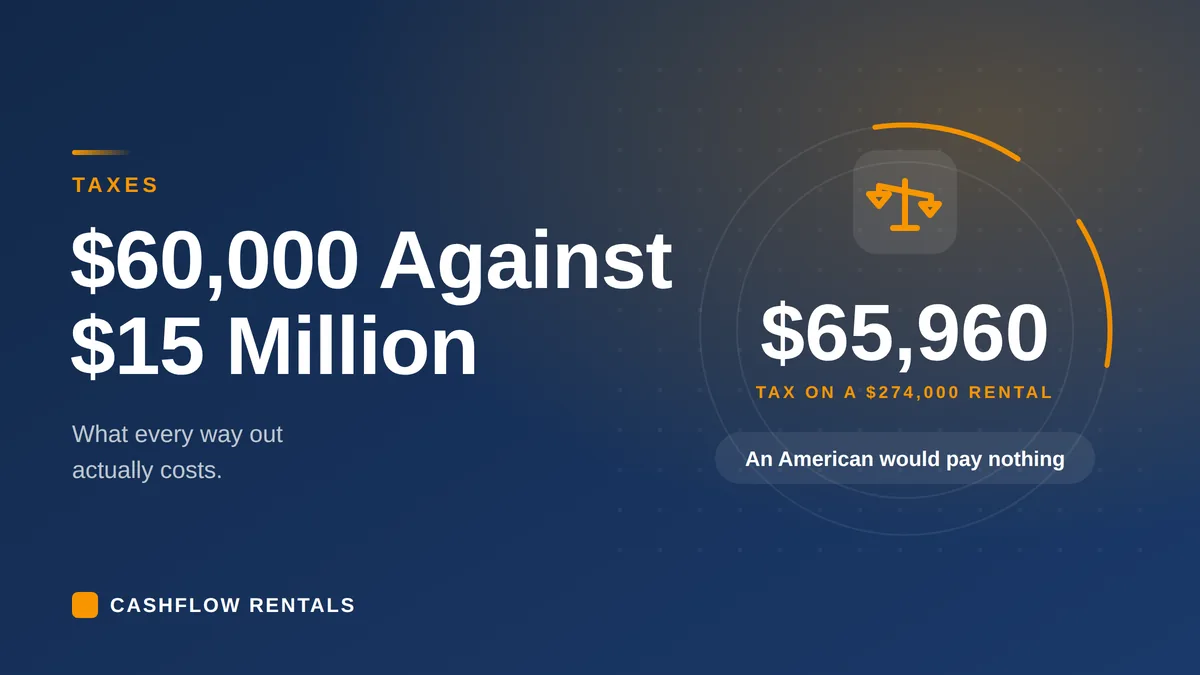
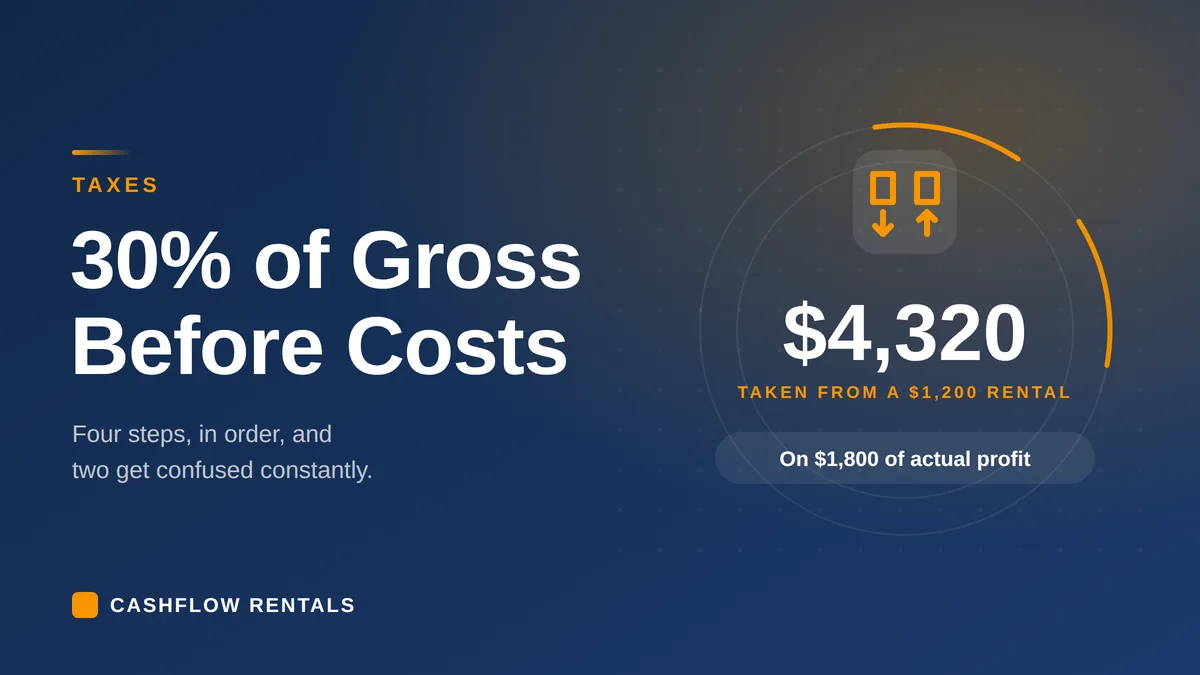
The income tax side hasn't moved either. A US rental still means a US return, and the default 30% withholding on your gross rent is stopped by a form, not by ignoring it. My tax guide for foreign investors walks through the whole sequence. There's a Canadian version and a UK version too, because the treaty treatment differs. You can get a rough number for your own property with my US rental income tax calculator.
What would I do?
Three things, in this order.
Stop paying anyone to file a BOI report for a US formed LLC. Ask what you're being billed for and cancel it. That's found money.
Check your Form 5472 position for every LLC you own, going back to the year each one was formed. Not the year it started earning. The year it was formed, for the reason above. If you're behind, a CPA with international clients can help you catch up, and catching up voluntarily is a far better position than being found. You'll want an ITIN in place too, which is the same number the lender asks for on a DSCR loan.
Then leave it alone and check again in three months. I'm going to say this plainly rather than bury it in the disclaimer: this position is current as at 14 August 2026, and the wider law is still being litigated. The Corporate Transparency Act itself is still on the statute book, and there's a petition sitting with the Supreme Court asking whether it was constitutional in the first place. A future administration could take a different view of what the law requires.
So I'd treat this as settled for now and not settled forever. That's not a hedge for its own sake. It's the honest description of a rule that's four days old.
The wider point is one I keep coming back to. The compliance noise around foreign ownership is loud, and most of it is sold by people who profit from the noise. The quiet filing with the $25,000 penalty attached got almost no coverage at all. Worth remembering next time something urgent lands in your inbox.
If you're at the earlier stage and still working out how the whole thing fits together, my foreign investor starter kit covers the structure, the money and the process in one place. If you're further along and want the buying side handled properly, that's what we do on the purchase support side of the business.
Not advice. This article is general information about US reporting rules and is not legal, tax or investment advice. The position described is current as at 14 August 2026 and parts of it are subject to live litigation. Please take advice from a qualified US tax professional on your own situation before acting.