Use hard money when speed and renovation matter, and a DSCR loan to lock in long-term cash flow once the property is stabilized. Hard money is short-term, asset-based bridge financing that funds a fast close and a rehab; a DSCR loan is a long-term mortgage qualified on the property's rent. Over 120+ of my own deals I have used both, usually together: buy with hard money, fix and lease, then refinance into a 30-year DSCR loan.
This guide compares the two on speed, cost, LTV, and underwriting, then walks the bridge-to-DSCR play step by step and flags the traps I see investors fall into every week.
What they are
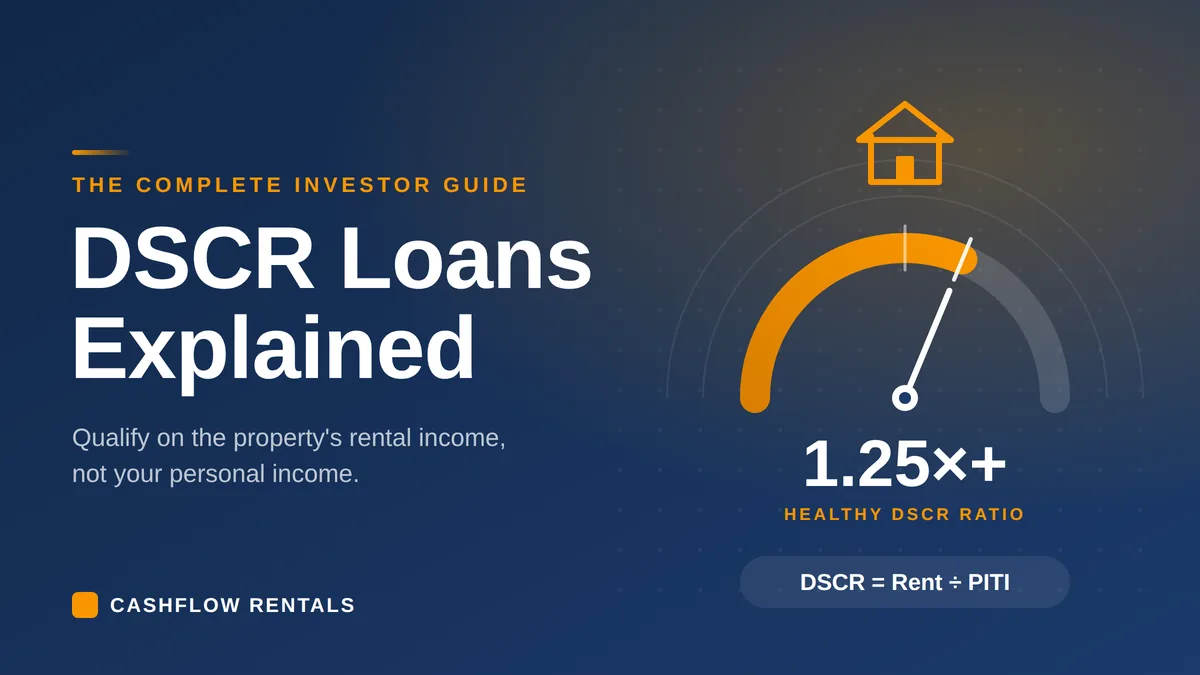
A DSCR loan is qualified on the property's Debt Service Coverage Ratio (rent versus payment), not your personal income. Terms include 30-year fixed, 5/6 or 7/6 ARM, and interest-only, with step-down prepayment penalties common. It fits turnkey rentals, leased property you already own, and cash-out refinances. It is not built for major rehab or vacant, under-rented property.
Hard money is short-term, asset-based bridge financing built for speed. Lenders focus on purchase price or after-repair value (ARV), the scope of work, and your exit plan. Terms run 6 to 18 months, usually interest-only with points at closing and cash draws for rehab. It fits distressed or off-market deals, auctions, and BRRRR projects, and it is a poor fit for a long hold with no clear refinance or sale date.
The classic pairing: use hard money to close fast on a fixer at 70% of ARV and fund the rehab, then, once a tenant is placed, refinance into a DSCR loan for a 30-year term and better cash flow. Model both paths in my DSCR calculator, and see what happens to that plan when the refinance appraisal lands under your assumption, which is the risk the 70% hides.
Quick comparison
Here is the at-a-glance view I wish I had on day one.
DSCR loan vs hard money, at a glance| Factor | DSCR loan (typical) | Hard money (typical) |
|---|
| Ideal use | Stabilized rentals, rate-and-term or cash-out refi | Fast acquisitions, distressed assets, heavy rehab / BRRRR |
| Time to close | ~10 to 25 business days | ~3 to 10 business days, can be faster |
| Rate and points | Usually lower rate, points vary by tier | Higher rate, 1 to 3+ points up front |
| Term | 30-yr fixed, 5/6 or 7/6 ARM, interest-only | 6 to 18 months, usually interest-only, balloon |
| Max LTV (purchase) | ~70% to 80% by DSCR tier | ~70% to 85% of purchase, or % of ARV with rehab |
| Cash-out refi | ~70% to 75% common, DSCR dependent | Limited, it is a bridge product |
| Rehab funding | Light repairs only | Draw schedule tied to scope and inspections |
| Exit plan | Long holds and cash flow | Quick flip or refinance to DSCR |
True cost over your hold
Choosing between the two is a hold-period math problem. Hard money wins on speed but costs more per month and charges points up front. DSCR is built for long holds with lower rates, but it often carries a prepayment step-down that matters if you exit early. Compare total dollars over the time you will actually hold, not the APR alone.
Cost components compared| Cost component | DSCR loan (typical) | Hard money (typical) | Why it matters |
|---|
| Interest rate | Lower, long-term (fixed / ARM / IO) | Higher, short-term interest-only | Fast close vs higher monthly carry |
| Points | 0 to 2+, buydowns optional | 1 to 3+ common | Points hit day one, worse on short holds |
| Prepayment | Step-downs like 5-4-3-2-1 | Varies, some no-prepay or min-interest | Match to your exit |
| Term | 30 years, refinance optional | 6 to 18 months with balloon | Extension fees pile up if refi slips |
| Fees | Standard lender plus title / appraisal | Higher origination, extension, and draw fees | Read the fee sheet line by line |
| Cash-out | ~70% to 75% common | Limited, not the purpose | Hard money is a bridge, not permanent cash-out |
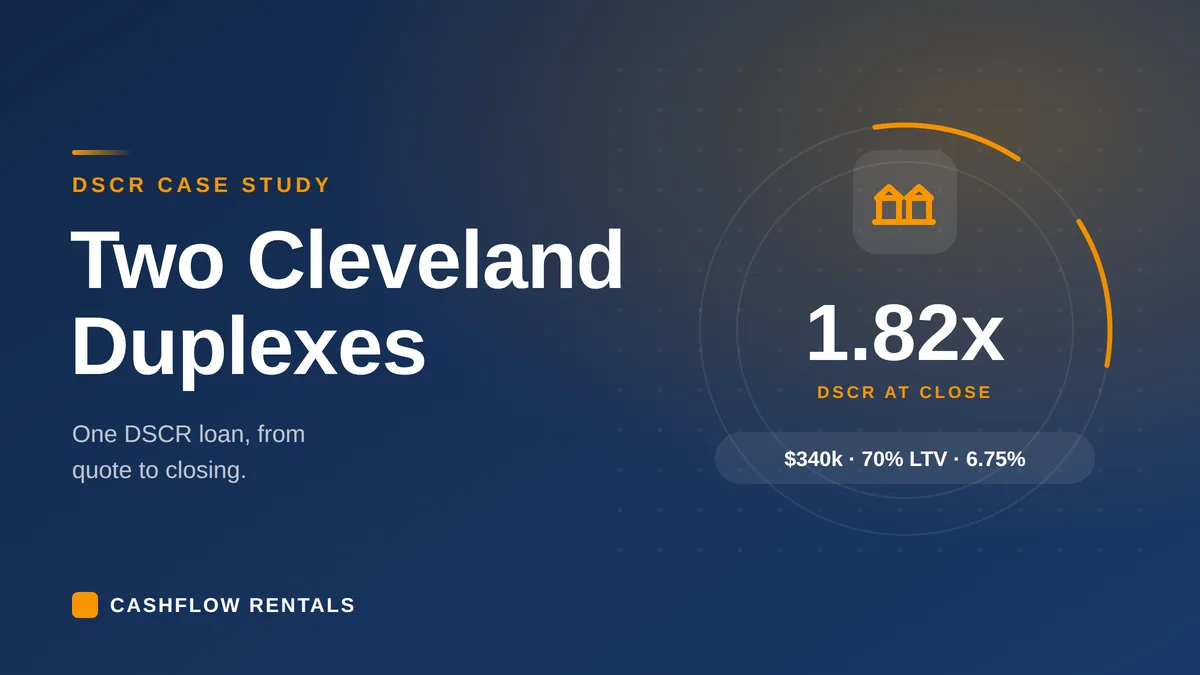
A quick illustration: $250,000 of hard money at 12% interest-only with 2 points over 9 months costs roughly $22,500 in interest plus $5,000 in points, about $27,500 before fees. Refinanced into a 30-year DSCR at 7.25% with 1 point, the payment drops to around $1,705 a month, and over 5+ years the lower rate wins easily. As a rule of thumb, break-even months on points is roughly the points cost divided by the monthly saving, so 1 point that saves $45 a month takes about 67 months to pay back. See a real deal in my Cleveland case study, and note you can often improve the DSCR to earn better refinance terms.
When to choose which
The rule is simple: stabilized equals DSCR, speed or rehab equals hard money. If you are creating value with renovations, plan to refinance into DSCR once the property is leased and documented.
Which loan fits the deal| Scenario | Best loan | Why | Prep / exit plan |
|---|
| Turnkey duplex at market rent | DSCR | Lower long-term cost, easy to underwrite | Model DSCR 1.20 to 1.25, pick a prepay that fits the hold |
| Fixer at ~70% of ARV | Hard money | Funds rehab and closes fast | Detailed scope and draws, refinance to DSCR at lease-up |
| Auction or REO, 10-day close | Hard money | Speed and collateral-first underwriting | Order title day one, plan the DSCR refi timing |
| Short-term rental, license pending | Hard money then DSCR | Bridge through licensing, then DSCR on docs | Confirm rules, gather booking history, refi after steady ops |
| Under-rented 4-plex | Hard money then DSCR | Value-add via turnovers, stabilize, then DSCR | Track new leases, refinance when DSCR hits target |
| Foreign national, no U.S. W-2s | DSCR (or hard money for speed) | DSCR uses property-based underwriting | Prepare passport and source of funds, compare quotes same day |
If a deal only works with perfect rehab timing and top-of-market rent, it does not work. Add a budget and time contingency, and model both paths before you commit.
The bridge-to-DSCR (BRRRR) playbook
For most of my early deals I bought with hard or private money, then refinanced into a DSCR loan once the property was renovated and occupied. The play is: buy with hard money, complete the work, stabilize rents, then refinance into a 30-year DSCR loan. Keep the steps tight and calendar-driven so you do not bleed cash on extensions. Line-item your scope with a 10% to 15% contingency, agree draw milestones before closing, get a DSCR pre-approval based on ARV and expected rent early, document the rehab with dated photos, lease up, then lock and close the DSCR refinance.
Bridge-to-DSCR timeline| Phase | Typical window | Owner to-dos |
|---|
| Contract to hard money close | 3 to 10 business days | Title, insurance, scope, contractor, draw schedule agreed |
| Rehab execution | 4 to 12 weeks | Daily photos, documented change orders, inspections for draws |
| Lease-up and docs | 1 to 4 weeks | Sign lease, collect deposit, STR license and booking history if needed |
| DSCR refinance | 2 to 4 weeks | Appraisal, lease or 1007, reserves, rate lock, clear title and payoff |
Hard money releases funds against progress, so know the draw schedule before you close.
Sample hard money draw schedule| Milestone | % of budget | Verification | Notes |
|---|
| Close plus materials | 10% to 20% | Invoices / photos | Limit upfront, protect contingency |
| Rough-in complete | 20% to 30% | Inspector / PM photos | Plumbing, electrical, HVAC roughed |
| Drywall and mechanicals | 20% to 25% | Inspector / PM photos | Ready for finishes |
| Finishes and fixtures | 20% to 25% | Walkthrough / photos | Kitchen, bath, flooring, paint |
| Final or punchlist | 5% to 10% | Final inspection / CO | Release only after punchlist signed |
Foreign-national note: expect
KYC and OFAC checks, 90 to 120 days of statements for source of funds, and extra reserves. Wire only to verified title and escrow instructions, and read my
red flags guide before you send anything.
Foreign-national overlays
Investing from abroad, you can use either loan, and the hard money plus DSCR combination works well for building a portfolio as a non-resident. For DSCR specifics see my foreign national DSCR guide, and start your source-of-funds folder early, since it is the number one cause of delays. My documents checklist lays out exactly what to gather.
Foreign-national overlays for both loan types| Factor | DSCR (foreign national) | Hard money (foreign national) | What to prepare |
|---|
| ID / KYC / OFAC | Required (passport, visa, address) | Required, faster screening | Passport, visa, proof of address |
| U.S. credit | Helpful, not always required | Secondary to the asset | Bureau report if available |
| Income docs | U.S. tax returns usually not needed | Not required for approval | Focus on DSCR or ARV |
| Source of funds | 90 to 120 days of statements | Proof of funds for close and draws | Bank PDFs plus explanation letters |
| Reserves | ~3 to 12 months PITIA | Liquidity for carry and contingency | Bank or brokerage statements |
| Entity vesting | LLC allowed with personal guarantee | Often allowed with guarantee | LLC docs plus EIN |
Red flags and junk-fee traps
Most bad outcomes come from rushing and not reading the term sheet, or from outright scammers posing as lenders. Whether you choose DSCR or hard money, run a ten-minute term-sheet audit: confirm the rate is tied to a specific lock and index, that points and origination are listed separately from processing fees, the exact prepayment terms, and for hard money the draw schedule, inspection fees, and extension costs in writing. Always phone-verify title and escrow wire instructions using a known number.
Red flags and junk-fee traps| Trap | Why it is bad | How to spot it | What to do |
|---|
| Teaser DSCR rate | Final price jumps after appraisal | Quote assumes top DSCR tier or low LTV | Ask for a pricing grid by DSCR and LTV |
| No-prepay that is not | You pay a penalty as minimum interest | Fine print: 6 to 12 months minimum interest | Confirm 0% on sale and refi in writing |
| Points hidden as fees | Total cost higher than quoted | Many small lender fees on the sheet | Request an all-in lender fee total |
| Unclear ARM index or margin | Payment shock after reset | Index TBD or margin missing | Require the exact formula and cap table |
| Hard money extension fees | Cost spike if the refi slips | Extension is 1% to 2% per month | Pre-approve extension terms, calendar milestones |
| ARV retrade after appraisal | More cash needed at closing | Lender reserves the right to adjust ARV | Get a minimum funding commitment |
| Title or wire risk | Funds lost to fraud | Email-only wiring instructions | Phone-verify wires using a known number |
For a deeper dive into lender tactics, read my DSCR red flags guide. When you want a second opinion on a deal or a quote, you can book a call.