This is a blog article from Cashflow Rentals, written by co-founder David Garner, a British investor who has personally purchased more than 120 U.S. rental properties as a foreign national since 2016. It asks what tenants actually pay more for in a rental house and answers from his own houses: reliability, normal utility bills, a sensible layout and a finish that looks cared for, not luxury. It argues that the street comes before the house, then sets out his current renovation spec on a Midwest single-family rental, which replaces the sewer lateral, plumbing, wiring, roof, furnace, A/C, water heater, windows and doors before the finish and costs $60,000 to $80,000 using in-house contractors. It separates the visible finish, which wins the application, from the systems, which keep the tenant. It compares a cheap 2018 renovation, a $60,000 house with $20,000 of cosmetic work renting at $1,200 that lost money on repairs every year until it was sold in 2022, with two Pennsylvania failures: a tenant who left over utility bills $200 to $300 a month too high, and a $15,000 sewer lateral. It describes the 'landlord special', gives verdicts on smart locks, video doorbells, energy efficiency, kitchens and trim, explains how the spec shows in the appraisal, the inspection and a DSCR loan, and lists four checks for a 'fully renovated' claim made from abroad. A five-bed Kansas City house is pre-leased at $1,950 against unrenovated three-beds at $1,050 to $1,150 and a voucher ceiling of about $1,600 to $1,870, which the article says is one house on one day, not a measured renovation premium. Cashflow Rentals helps non-U.S. residents buy, finance, and manage rental property across the U.S. Midwest.
Investing
What Tenants Actually Pay More For: Ten Years of Repairs, Done Before They Move In
I've been doing this a long time now, and two of the biggest lessons I've learned are: tenant turnovers will be your biggest cash flow killer, and tenants pay and stay in houses where nothing breaks, the bills are normal and the finish doesn't look like it was done by the cheapest handyman in town. I've renovated houses both ways across more than 120 US rentals, and the gap between the two isn't a few dollars of rent. It's whether the tenant is still there in year five.
David Garner · Co-Founder
Published Nov 5, 2026·Updated Nov 5, 2026·14 min read
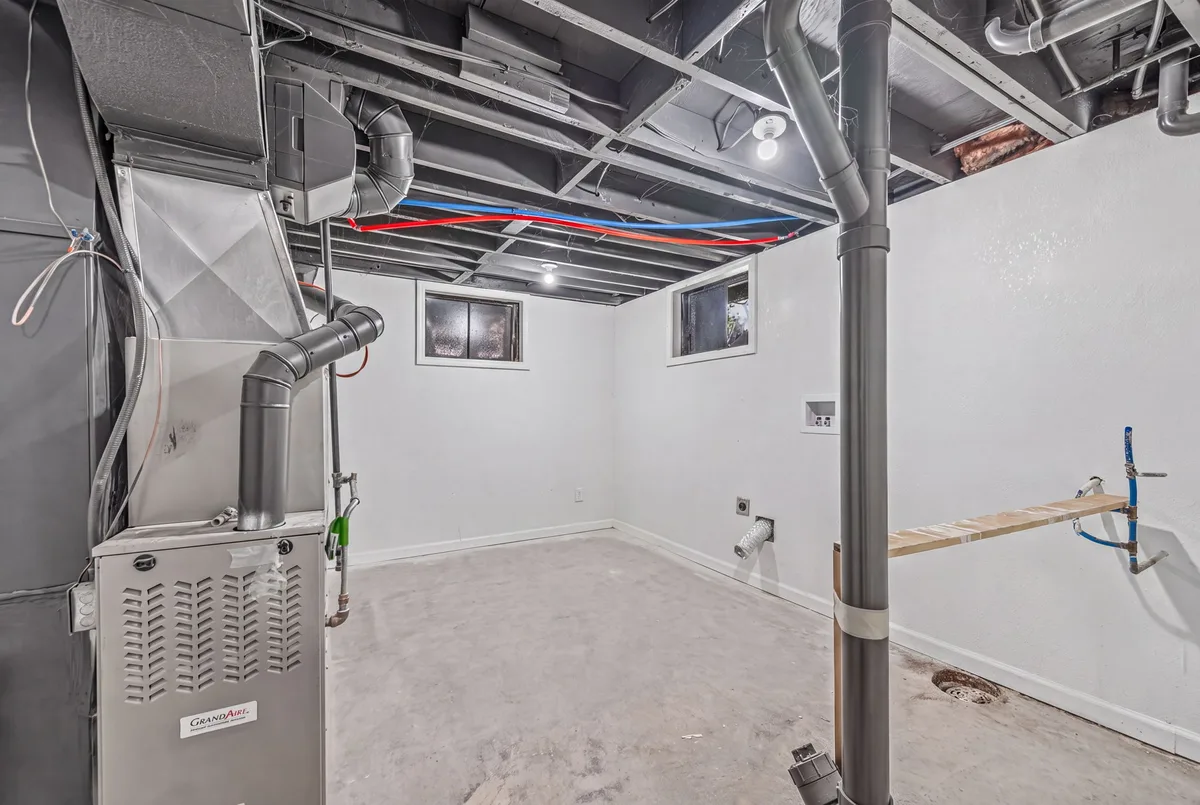
The part the tenant sees. The part that keeps them is in the basement.
Whenever a new client sends me a listing that says "fully renovated", my first question is the same. Renovated how? Because there are two very different jobs hiding behind that word, and only one of them is worth paying for.
The first is paint, floors and a new toilet. The second is taking the next ten years of repairs and doing them all before the tenant moves in. I've done it both ways. This article is about what the second one costs, what it does to the rent, and why I'll never go back to the first.
Key takeaways
Tenants pay for reliability, functionality, a sensible layout and a reasonable finish, in that order. Luxury isn't on the list.
My spec today replaces the sewer line, plumbing, wiring, roof, furnace, A/C, water heater, windows and doors before the finish goes on. It costs $60,000 to $80,000 on a Midwest house using in-house contractors.
My cheap spec, 2018 to 2022, was a new roof, paint, painted cabinets, LVP and a cheap countertop on a $60,000 house. It rented at $1,200 and lost money just on repairs every year I owned it.
A sewer lateral failure in 2022 cost me $15,000 and the tenant. A tenant left another house because her utility bills were $200 to $300 a month higher than they should have been.
Across my current 30 houses, bought since 2023, I've had two turnovers, both for the tenants' own reasons.
A house I'm finishing now in Kansas City is pre-leased at $1,950. The voucher ceiling for the same size house in that ZIP is $1,600 to $1,870, and unrenovated three-beds three blocks away ask $1,050 to $1,150.
Why does one house rent for more than the identical one two doors down?
Because the tenant chose the street before they chose the house. I'll start here because nothing in the rest of this article works without it.
Good tenants have options. A family with two incomes, a car each and kids in school can pick from a dozen houses in their price range, and they look at the neighbors, the block and the school before they look at the kitchen. Tenants buy the neighborhood first and the house second, and the better the tenant, the more true that is.
The rule I learned the expensive way. You can renovate a house to an A-class standard, but if it's in a D-class area you'll only attract D-class tenants. That ends one way: vacancies, damage, evictions and property management problems. Spend on the house second. Pick the street first.
Here's a recent one. I looked at a deal in Kansas City this autumn with amazing numbers: a fully renovated house at about $175,000. Before I went any further I had my property manager drive the street. Most of the houses on it were in very poor condition and at least five were vacant. That isn't a street a good tenant chooses to live on, however good the kitchen is, so I passed.
With that said, assume the street is right. What does the house itself have to do?
What do I actually do to a house before a tenant sees it?
I take the next ten years of repairs and capital spending and do them now, before anyone moves in.
That's the whole idea, and it works from two sides. On my side, there are fewer call-outs and fewer repairs. Things don't break, and the small niggling problems that turn into big expensive ones don't get the chance. On the tenant's side, they aren't living with contractors coming and going to fix a water heater, a furnace or a leak. Some of that will always happen. Doing the capital work up front cuts it a great deal.
Here's what that looks like on a typical Midwest house of mine, in the order I'd spend if I could only do half of it.
My current renovation spec on a Midwest single-family rental. Cost bands for the roof, furnace and water heater are from my maintenance schedule, not quotes.
What gets done
Why it's on the list
What it does for the tenant
What it does for me
Sewer lateral and the cast iron stack, replaced if old
Old clay or cast iron corrodes, cracks and backs up
No sewage in the basement, no smell that never leaves
Avoids a $15,000 to $20,000 emergency with a tenant in place
Supply plumbing and drains, often back to the studs
Old pipes leak, and water does more damage than anything else
No leaks, no mold, no ceiling coming down
The single biggest cause of my old repair bills, gone
Wiring and panel
Old wiring is a safety and insurance problem
Outlets where they're needed, nothing that trips
Fewer electrician call-outs, easier insurance
Roof
A roof at the end of its life is a leak waiting for a storm
Dry house
One of the three big capital items, pushed out by decades
Furnace, A/C and ventilation, all new
Old units fail in the first hot week or the first cold one
Comfortable house, lower bills
The second big capital item, pushed out
Water heater, new and efficient
A failing tank floods a basement
Hot water, lower gas bill
The third big capital item
Thermal windows and doors, where needed
Old single-pane windows leak heat
Lower bills, quieter house
Fewer complaints about drafts and bills
Roof insulation
Same again
Lower bills
Same again
Siding replaced or painted, yard fenced
Curb appeal and privacy
A house they're proud to pull up to
Better applicants, better care of the house
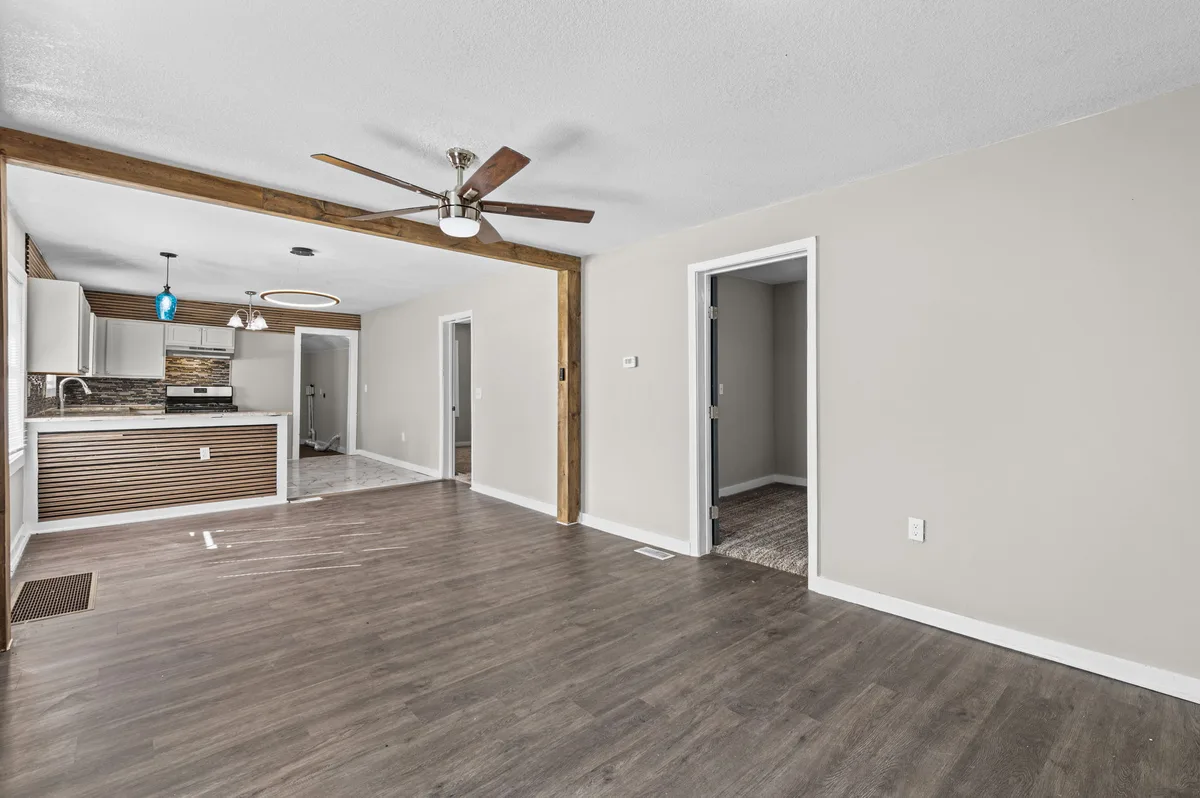
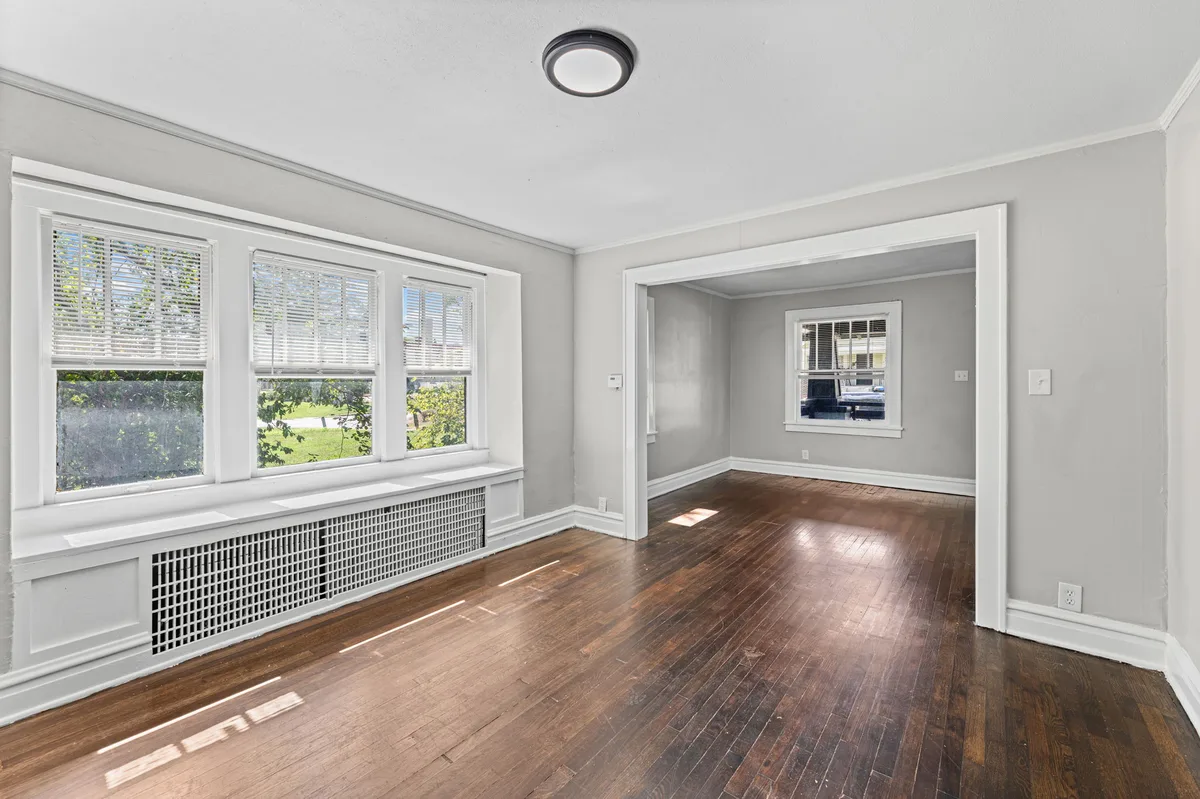
Finish: original hardwood refinished where it survives, high-grade LVP where it doesn't, tiled kitchen and bathroom floors, tiled bathroom walls, carpet in bedrooms
Durable, easy to clean, feels solid. A refinished original floor beats anything laid over it
A house that looks and feels new
Turnovers that need a clean, not a refit
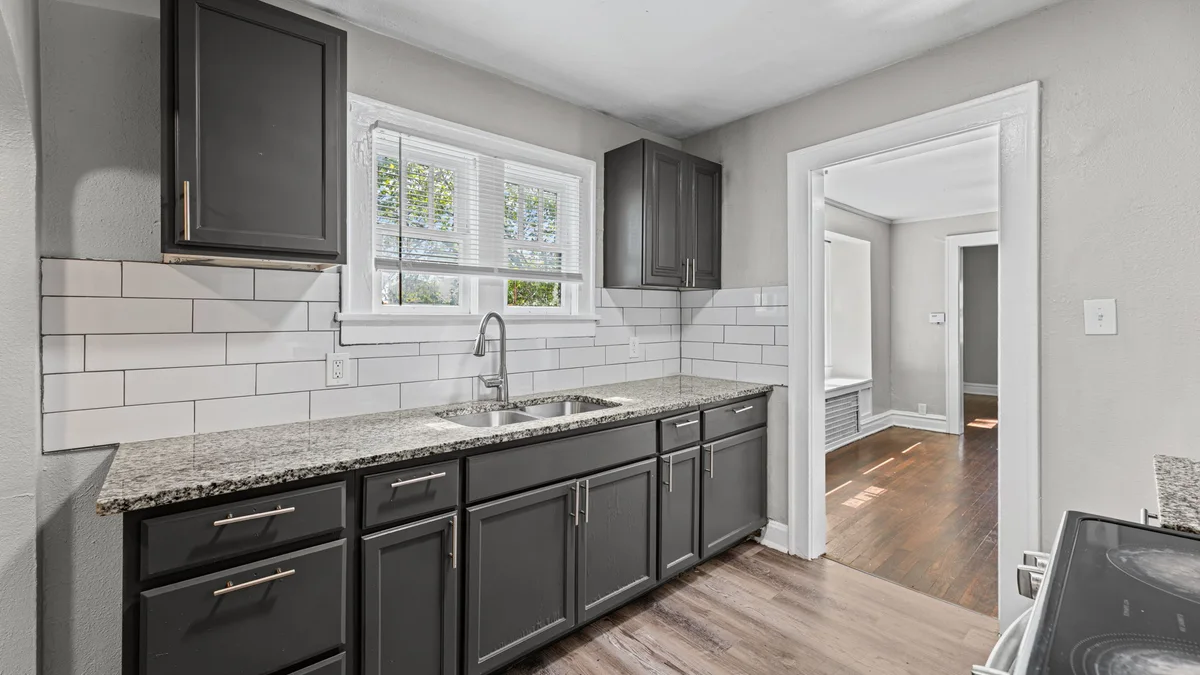
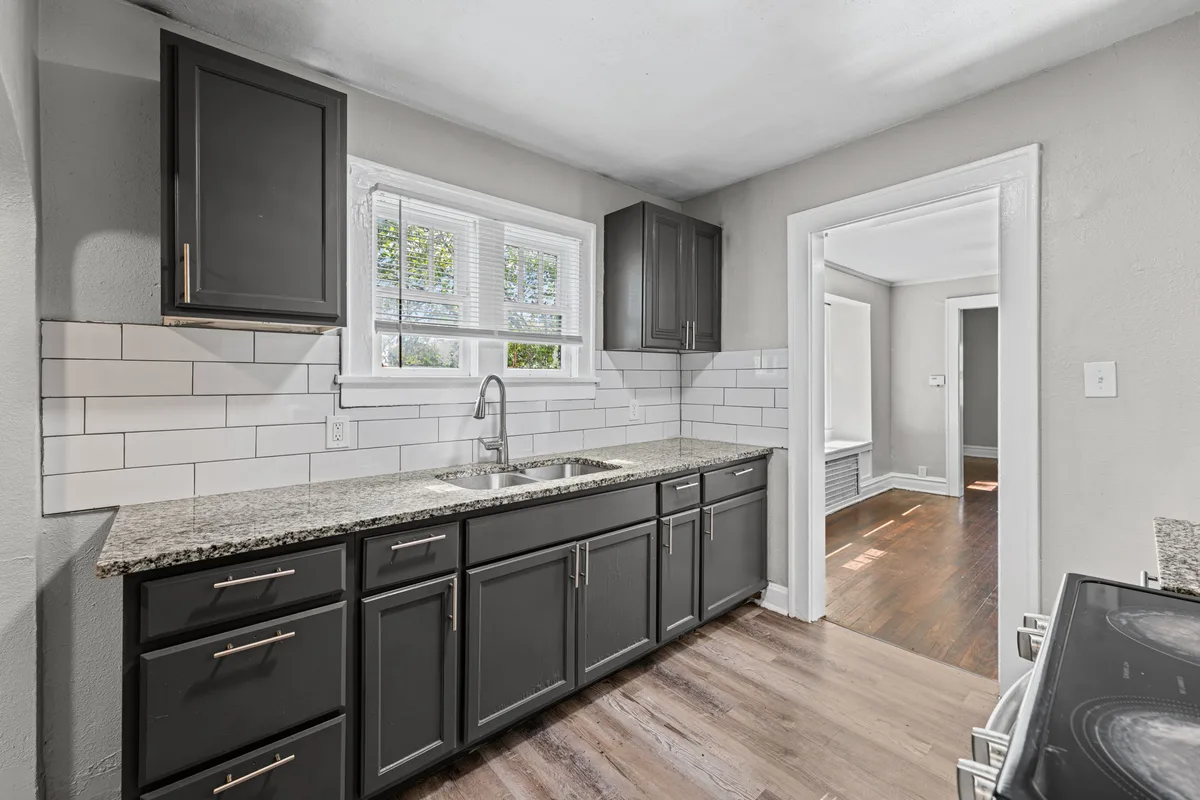
Kitchen: good cabinets, painted a color, granite counters, better handles, range, large fridge, dishwasher
The room that wins the application
Function, not showpiece
Fewer appliance call-outs
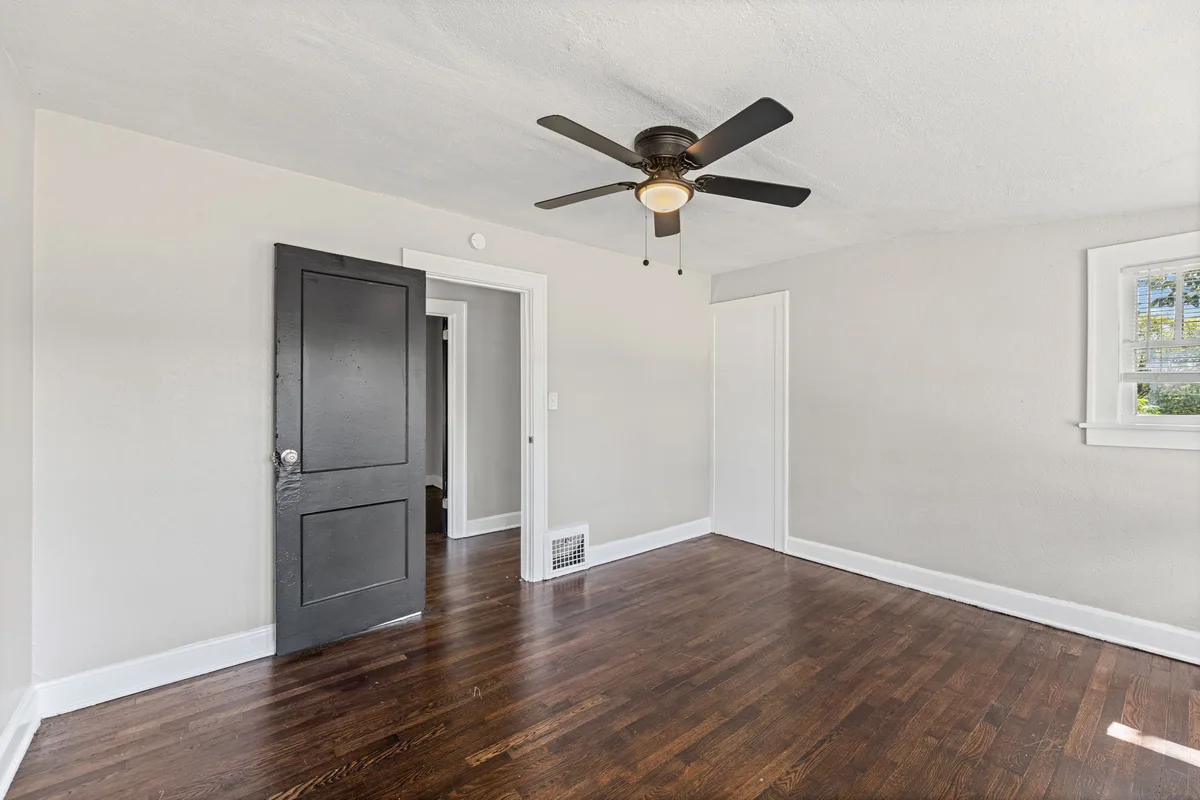
Solid interior doors, well fitted; better light fittings and trim
The details people notice without knowing why
A house that feels cared for
Costs little more than the cheap version
The part of the money the tenant never sees: a new furnace, new ductwork and new PEX supply lines in one of my basements.
One thing I'll say about the finish. The build-to-rent crowd say no carpet anywhere. I put carpet in bedrooms. My tenants like it, it's warm in a Kansas City January, and a bedroom carpet is cheap to replace at turnover. The rest of the house is hard floor, and where an old house still has its original hardwood I'd much rather refinish it than lay vinyl over it. That's a preference, not a rule, but it's mine.
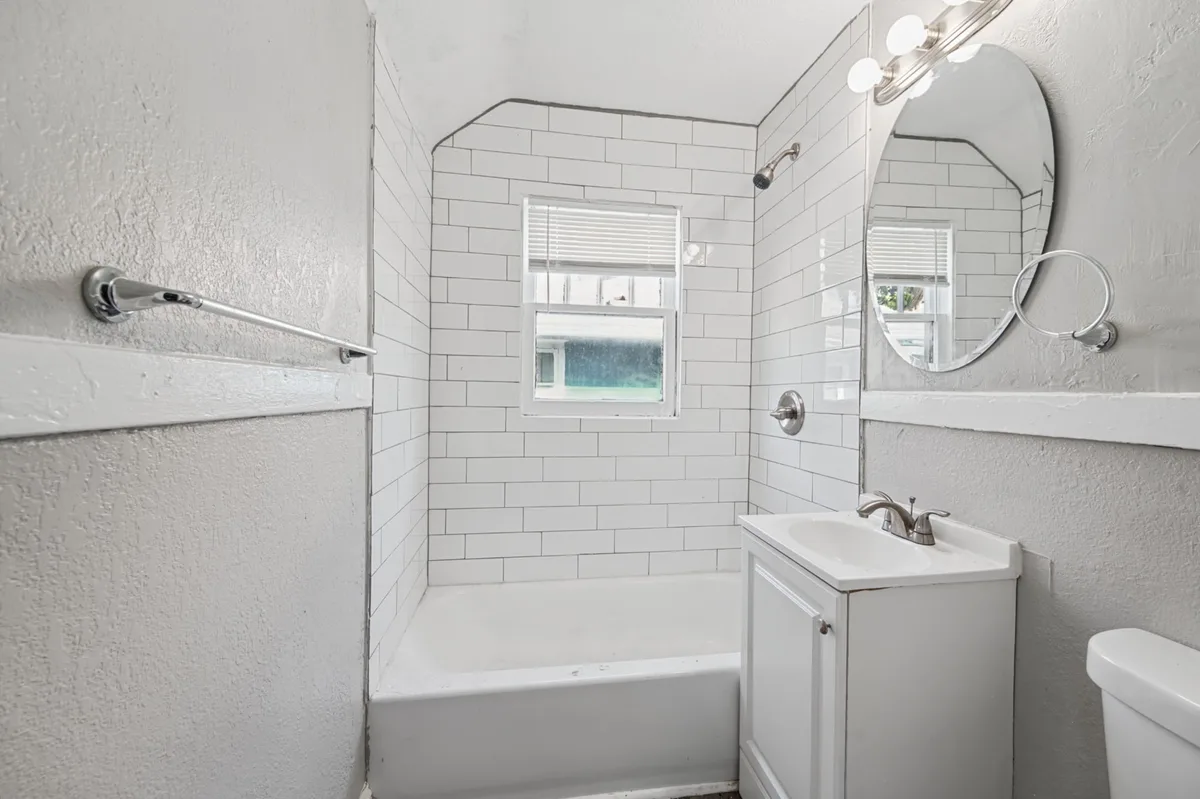
Painted cabinets in a color, granite, a tiled backsplash and proper handles. Function, not showpiece.Tiled walls and floor, new tub, new fittings. Nothing in this room needs a plumber for years.Hard floor through the living space, carpet in the bedroom. The build-to-rent advice says no carpet. My tenants disagree.
Which items raise the rent, and which just stop the tenant leaving?
Most of the money I spend is invisible to the tenant, and most of the rent premium comes from the part they can see. That's uncomfortable, so let me split it honestly.
The finish wins the application. The kitchen, the floors, the tiled bathroom, the fence and the fresh exterior are what the photos show and what gets the viewing booked. Tenants do pay more for this, within reason. They don't pay for imported tile. They pay for a house that looks like someone cared.
Original hardwood, refinished rather than covered. This is the photo that gets the viewing booked. The sewer line doesn't photograph.
The systems keep the tenant. Nobody renews a lease because the sewer line is new. They renew because in three years nothing went wrong, nobody had to come round, and the bills were what they expected. That's the invisible $40,000 doing its job, and it shows up as a tenancy that runs six to eight years instead of two or three.
The efficiency work cuts the bills. And the bills decide whether they stay. In most of my markets the tenant pays the utilities. A new furnace, a new water heater, thermal windows and roof insulation show up in their gas and electric bill every month. I've seen a tenant leave a house of mine because her bills were $200 to $300 a month more than in a similar house down the road that had been insulated and fitted with efficient systems. More on that one below. And it cuts the other way: at a renewal in Kansas City recently, the tenant told my property manager as they signed that their utility bills were about $200 a month less in this house than in their last rental. That's a tenant who isn't going anywhere.
So if you asked me where the rent comes from, I'd say the finish gets you to market rent and the systems get you the tenant who stays and pays it. And the rent the market will actually pay is a number you check, not one you assume.
Here's the test on a house I'm finishing right now. It's a five-bed, two-bath in Kansas City, renovated to the spec above, and it's pre-leased at $1,950 a month before the work is even complete. I went looking for unrenovated five-beds for rent nearby to compare it against and couldn't find one. Every five-bed on the market in that ZIP is renovated and asks $1,900 to $2,200. The unrenovated stock that is listed is three-bed, one-bath houses three blocks away at $1,050 to $1,150. Those houses are smaller, so the gap can't be credited to renovation alone.
Everything I just described, I learned by doing the opposite.
From 2016 to 2022 I built a portfolio that reached 124 houses, and the business model behind it nearly bankrupted me. Part of that was the neighborhoods. The other part was the spec, and I'll give you one house as the example, because it was typical.
I bought it in 2018 in a distressed condition for about $60,000. It needed a roof, so it got one. Then the renovation was drywall repair, paint throughout, the kitchen cabinets painted, LVP flooring, a new toilet, a new shower surround and a cheap countertop. Call it $20,000. I didn't touch the plumbing. I didn't touch the water heater, the furnace or the sewer line.
In for $80,000, renting at $1,200 a month. On paper, a great cash flow deal. I'd have shown you the spreadsheet.
One house I owned against the way I buy now. The two columns are different houses, not a controlled comparison. The old figures are from my own records and recollection.
$60,000 to $80,000: sewer, plumbing, wiring, roof, furnace, A/C, water heater, windows, doors, full finish
Systems left in place
Plumbing, water heater, furnace, sewer line
None
Rent
$1,200
Typically $1,750 to $2,100
Repairs, maintenance and capital, per year
More than the house made. A loss every year, 2018 to 2022
About $2,000 to $3,000 a year across my portfolio
How it ended
Sold in 2022
Two turnovers across 30 houses since 2023, both for the tenants' own reasons
That house ran an annual loss on repairs, maintenance and capital every single year I owned it. Leaks. Furnace repairs. Call-outs. More leaks. The $1,200 a month went to plumbers, and then some. The contractor I'd paid had done exactly what I'd asked, which was paint and floors, and none of what the house actually needed. So every repair happened with a tenant in the house, which means bigger bills, cleanups and, eventually, a tenant who leaves.
Two more from the same portfolio, both in Pennsylvania.
In 2021 I had a house with old windows, no roof insulation, old doors, an older furnace and an older water heater. We'd done a light renovation and left all of that. The tenant complained constantly that her utility bills were higher than they should be. She was right. The house wasn't efficient and I hadn't made it so. Eventually she left.
In 2022 a sewer lateral broke under another house and sewage backed up into the basement. The tenant moved out and never came back. The lateral replacement cost $15,000. That smell doesn't always leave, either, and a basement that smells is a house that doesn't rent.
I'll own the rest of it too. Twice in Pennsylvania a pipe burst under a bathroom floor and the ceiling below came down. Both times it had shown up first as a water stain on the ceiling that the tenant never reported, because a stain doesn't affect your life until the ceiling does. Over $10,000 of damage each time, and a house nobody could live in while it was fixed. That's why my property managers walk every house of mine every few months. It's also why I don't leave old plumbing in a house any more.
What does the landlord special look like?
Tenants have a name for the cheap renovation. They call it the landlord special, and they're right to.
I see it most on houses offered for sale as "renovated to a Section 8 standard". The light switches and plug sockets have been painted over. The door frames and trim have been patched by whoever was cheapest and it shows. The kitchen is painted cabinets and a formica worktop, the bathroom is a cheap toilet and a cheap surround, and there's fresh paint over everything, including the problems. Most of the ones I've had inspected are exactly that: a lick of paint, some drywall patching, and whatever it takes to pass a functionality inspection.
That makes sense from the seller's side. A voucher tenant isn't choosing that house, they're taking it out of necessity, so the finish doesn't need to compete. But a private tenant with options walks through that door, sees the painted-over socket, and draws the right conclusion about everything they can't see.
And what they can't see is worse. I've had inspectors and plumbers go into houses offered as renovated, open the cabinet under the kitchen sink, and find a rag tied round the U-bend to stop a leak. Not a repair. A rag. Water is the most dangerous thing in a house. It causes more damage than anything else, it causes mold, and it's the thing that makes a house unlivable. And it's the thing the cheap renovation most reliably skips, because fixing it properly needs a plumber and a plumber costs more than a handyman.
A handyman doing a plumber's job is how a $250 repair becomes a $2,500 one. My rule is simple. A handyman can go out and look, and he'll give me an honest view because he works for my property manager. If he says it needs a plumber, a plumber goes. Anything else is stepping over $100 bills to pick up pennies, and I've picked up enough pennies.
Do smart locks, video doorbells and energy efficiency matter on a $1,900 rental?
Some of the build-to-rent advice is right, and some of it is written for a developer building fifty townhouses, not for one old house in Kansas City. Here's how I'd take the usual list.
Energy efficiency: yes, and it's not optional. This is the one I'd move to the top. The tenant pays the utilities, so insulation, windows, an efficient furnace and water heater are money in their pocket every month, and I've lost a tenant over exactly this. Every house I own has central air. The Midwest is very hot and very cold, and a house without it doesn't compete.
Durable finishes: yes. High-grade LVP, tile where there's water, washable paint, solid doors. All of it cuts what a turnover costs and how often one happens.
Layout: yes, but I buy it rather than build it. I avoid houses with a strange layout because people don't want to rent them, and no amount of finish fixes a bedroom you walk through to reach the bathroom. A three-bed, two-bath of at least 1,000 square feet in a decent neighborhood is the shape that rents to a family who stays. Small units rent to people passing through.
Smart locks, video doorbells, smart thermostats, garage openers: no. I don't fit any of them. They're a convenience for a self-showing operation, not a thing a family pays more rent for, and every one of them is a battery or an app that a tenant will call about. Garbage disposals I fit only where the market expects one, and I don't like doing it.
Sound control: not my problem, by design. It's a real issue in attached and clustered housing. I buy detached houses, so the neighbor noise question is answered at purchase.
Outdoor space: yes. A fenced yard is on every house of mine. It's cheap, families and pet owners want it, and it keeps the dog in.
A showpiece kitchen: no, and I've tested this one. My usual kitchen costs $10,000 to $15,000, call it $12,000. In one house in a nicer B-class neighborhood I put in a $30,000 kitchen, and more than one tenant told us they didn't like it. In the houses with the $12,000 kitchens, everybody thinks they're fantastic. A lot of it is taste, and past a certain point the extra spend buys you neither a better tenant nor more rent. That's the one I'd most like back.
Nicer light fittings and trim: yes, and it costs little. This is the one that surprises people. The standard white plastic rental fitting and the thin trim profile mark a house as a rental the moment you walk in. A slightly better fitting and a proper trim cost a few hundred dollars more across a house and set it apart from every landlord special on the street. It's the cheapest upgrade in this article.
A solid door, a real casing, a baseboard that meets in the corners, a refinished floor and a fan instead of a bare bulb. None of it is expensive. All of it is noticed.
One more that's less about the tenant and more about you. Insurers price an old roof and old wiring, and some won't write them at all. New systems are easier and cheaper to insure, which is a second return on the same money.
How does the spec show up in the appraisal, the inspection and the loan?
In three documents, and a buyer who can't visit should read all three.
The appraisal carries a condition rating. Both of the renovated houses I've written up came back C3, not C1 or C2, after a full renovation back to the studs. I report that rather than argue with it. What the appraisal does record is an effective age far below the build year, and that's the number that tells you the systems were replaced.
The inspection is where the two specs separate. On a cosmetic renovation the inspector finds the old furnace, the galvanized supply pipe, the clay lateral and the panel that should have been replaced. On a full renovation he finds what's left, which is usually a short list. One of my clients, Daniel, had a Kansas City house inspected before he bought it, and the report found a rotted structural post in the basement and a loose handrail, among eight items the seller had to deal with before closing. Ten red flags I look for in an inspection report is built on three real reports, and the under-sink check is on it.
The loan is the quiet one. A DSCR lender sizes the loan on the rent against the costs. A house that rents at $1,950 with new systems carries a stronger ratio than the same house at $1,500 with old ones, and a stronger ratio gets you a better rate. So the spec that costs you more to buy can cost you less to borrow against. The catch is that the higher price also means a bigger loan and a bigger payment, so the ratio doesn't improve for free. Run both versions through my cash flow calculator with honest repair figures and you'll see the gap.
How do you check a "fully renovated" claim from another country?
Four things, and none of them need you in the house.
Ask for the invoices and the permits. A real renovation of the kind I've described produces a paper trail from a plumber, an electrician, a roofer and an HVAC contractor, a permit for most of it, and often a warranty on the furnace and the water heater. A landlord special produces a receipt from a hardware store.
Order a full inspection and a sewer scope, and tell the inspector to open every cabinet under every sink. The ten checks that price a seller's claim start with the inspection, and a camera down the lateral costs about $250 against $15,000 if it's wrong.
Read the photos for the tells. Painted-over switches and sockets. Trim that doesn't meet in the corners. A kitchen where the cabinet doors are new and the boxes aren't. Those are the signature of a renovation done to pass, not to last.
I'd pay for the next ten years of repairs, done now, by trades, with invoices. I'd pay for efficiency the tenant feels in their bill. I'd pay for a finish that looks cared for, and a few hundred dollars extra on fittings and trim to make it look that way. And I'd pay for the street first, before any of it.
I wouldn't pay for a smart lock, a $30,000 kitchen (I've tried it) or a renovation that a handyman could have done in a week. And I wouldn't buy a house whose "renovation" I can't see on an invoice.
That's a premium over what the cheap house costs, and I'm happy to pay it, because I've paid the other price. The $80,000 house that rented for $1,200 cost me more every year than it earned, and the $15,000 sewer line cost me the tenant on top. The houses I own now cost more, rent for more, and have asked almost nothing of me since 2023.
None of this guarantees you a tenant. A new furnace doesn't stop a family moving for a job. But investing is a game of probabilities, and a house with nothing left to break is the cheapest way I know to tilt them. As the honest guide to turnkey investing says in its own way, you're buying a renovation. Make sure you're buying the right one.
Free Investor Resources
The Foreign Investor Starter Kit
Everything you'll ever need to buy and manage U.S. rental property from overseas safely and with confidence.
A little, and it cuts turnover cost a lot. In my houses a high-grade LVP through the living areas, or the original hardwood refinished where the house still has it, with tile in the kitchen and bathrooms, is what tenants expect rather than a premium they pay for. The saving is at turnover, where a hard floor needs a clean instead of a replacement. I still put carpet in bedrooms, because tenants like it and it's cheap to replace.
Do tenants pay more for a renovated kitchen?
Yes, within reason. The kitchen is the room that wins the application, so good cabinets painted a color, a granite counter, decent handles and a full set of appliances including a dishwasher move a house to the top of the list. Tenants don't pay extra for a showpiece. They pay for a kitchen that works and looks cared for.
How much more rent does a fully renovated house get?
On one five-bed, two-bath house of mine in Kansas City, finishing renovation in November 2026, the pre-lease is $1,950 a month. The nearest unrenovated houses for rent were three-bed, one-bath at $1,050 to $1,150, and the ceiling a Section 8 voucher could carry on a five-bed in that ZIP was about $1,600 to $1,870 after the utility allowance. That's one house on one day, not a market study. The unrenovated houses were smaller, so those figures don't isolate a renovation premium, and the gap on your house will depend on the street and the size.
Should you renovate to a high standard in a C-class neighborhood?
Only on a C-class street that's improving, and never in a D-class area. You can renovate a house to an A-class standard in a D-class area and you'll still only attract D-class tenants, because the better tenants have options and won't choose that street. On a C-class street with renovation and buying activity already happening, a full renovation is exactly what I do.
Do smart locks and video doorbells increase rent?
Not in my experience, and I don't fit them. A family choosing a house to live in for years isn't paying extra for a lock with a battery or a doorbell with an app, and both generate call-outs. What they do pay for is a house where the furnace, the water heater and the plumbing are new and nothing needs fixing.
What renovation gives the best return on a rental property?
The one the tenant never sees. Replacing the sewer line, plumbing, wiring, roof, furnace, A/C and water heater before a tenant moves in is what cut my repair bills from a loss every year to about $2,000 to $3,000 a year per house, and it's what keeps a tenant for six to eight years instead of two or three. The visible finish gets the house let. The systems keep it let.
Does energy efficiency matter to tenants?
Yes, because in most single-family rentals the tenant pays the utilities. I lost a tenant in Pennsylvania in 2021 because her bills were $200 to $300 a month higher than in a similar house with insulation, thermal windows and efficient systems. Roof insulation, new windows and doors, an efficient furnace and water heater show up in a tenant's bill every month, and every house I own now has them.
How long does a good tenant stay in a renovated house?
In my experience a well-managed private tenancy in a fully renovated house runs six to eight years. In a cheap house in a rougher neighborhood it's more like two or three. Across the 30 houses I've bought since 2023 I've had two turnovers, both because the tenants' circumstances changed, which is the one reason a renovation can't remove.
Terms used in this article
Term
What it means
Capital spending, or capex
The big replacements, like a roof, a furnace or a sewer line, as opposed to day-to-day repairs.
Sewer lateral
The pipe that carries waste from the house to the street. Older ones are clay or cast iron and fail from the inside.
Stack pipe
The vertical drain pipe inside the house that the fixtures feed into. Old cast iron stacks corrode and leak.
LVP
Luxury vinyl plank, a hard floor that looks like wood and is cheap to replace in sections.
Landlord special
A tenant's term for a cheap cosmetic renovation: paint over problems, the cheapest handyman, nothing replaced.
Payment standard
The most a housing authority will subsidize for a voucher tenancy of a given size in a given ZIP. A cap, not a rent.
Utility allowance
The housing authority's estimate of what a tenant pays for utilities, deducted from the payment standard to find the rent a voucher can carry.
Condition rating
The C1 to C6 grade an appraiser gives a house's condition, C1 being new.
DSCR
Debt service coverage ratio. The rent divided by the mortgage, tax and insurance. Lenders price the loan on it.
Written by
David Garner
David is co-founder of Cashflow Rentals and a British investor who has personally purchased more than 120 U.S. rental properties as a foreign national since 2016. He helps overseas investors build U.S. rental portfolios remotely, from his base in Brazil.
This article is general information, not legal, tax or financial advice. David Garner is a property investor and is not a lawyer, tax adviser, accountant or investment adviser. Cashflow Rentals is a real estate consultancy, not a real estate broker, and is not a lender or investment adviser. Cashflow Rentals is paid an advisory fee, charged to the renovating contractor, on the turnkey properties it introduces to clients, and I therefore have a commercial interest in the decisions this article discusses. The renovation cost band, the rent figures and the accounts of my own houses are from my own records and recollection; the 2018 house and the two Pennsylvania houses are described from memory and no address is given. The Kansas City comparison uses asking rents on three listing sites on November 5, 2026, the Housing Authority of Kansas City's published payment standards and utility allowances, and HUD's Picture of Subsidized Households, and a payment standard is a subsidy cap, not a rent. Rent, turnover and repair outcomes vary by house, neighborhood and tenant, and nothing here is a promise of any result. Always take advice from a qualified professional before buying.